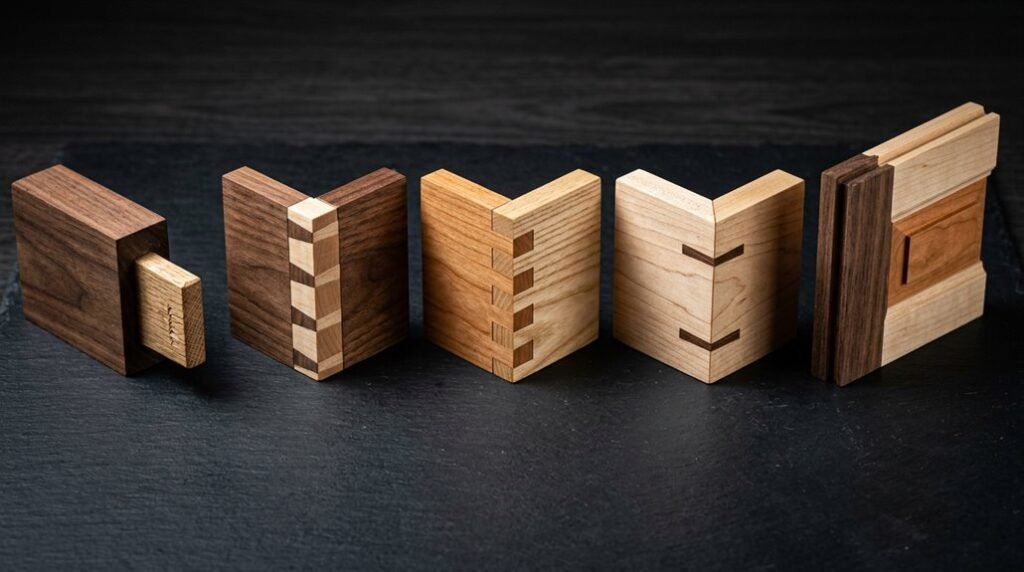
Whether you’re building a bookshelf, crafting a drawer, or reinforcing a frame, choosing the right joints is important. I’ve learned that five core techniques—butt joints, mortise and tenon, dovetails, dados, and tongue and groove—cover most woodworking projects. Each joint serves a specific purpose, from quick assembly to maximum strength.
Here’s what you need to know to choose and execute the right joint for your next build.
Butt Joints: Fast Assembly When Appearance Isn’t Critical
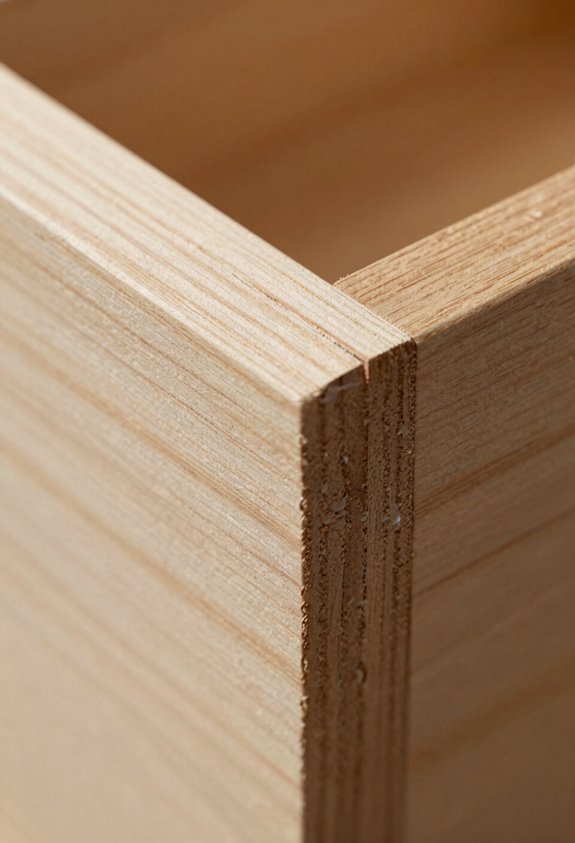
When you’re just starting out in woodworking, butt joints are probably the first joints you’ll encounter, and for good reason. I’m talking about simply butting two pieces of wood together; no fancy shaping required. You’ll find butt joints everywhere in quick carpentry jobs like baseboards and window trims where speed matters most.
Here’s what you need to know: butt joints aren’t strong on their own. That’s why I always reinforce them with glue and fasteners like nails or screws. For better appearance, I countersink these fasteners so they sit flush or hidden beneath the surface.
Think of butt joints as your foundation. Once you master quick assembly and understand their strength limitations, you’re ready for more complex joints like mortise-and-tenon or dovetails.
Mortise and Tenon: The Strongest Choice for Frames and Structure
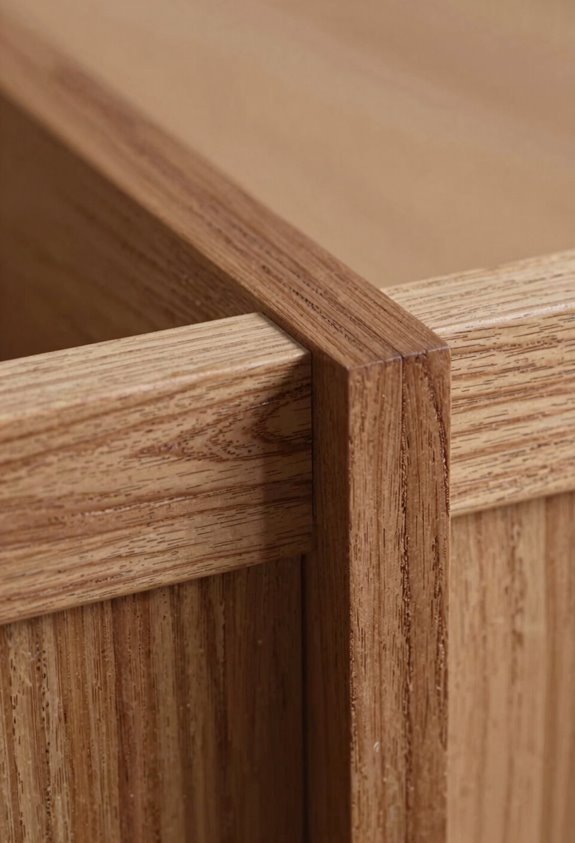
Once you’ve built confidence with butt joints, you’re ready to step up to mortise and tenon joints, the heavyweight champion of woodworking connections. I’ll show you why craftspeople trust these joints for serious work.
A mortise and tenon joint pairs a projecting tenon on one piece with a corresponding mortise (hole) in another. The result is remarkable strength and a large gluing surface that makes your frame or furniture durable and long-lasting.
Here’s my process: I always cut the mortise first. This guarantees the tenon fits snugly every time. For extra reinforcement, I add wedges, pins, or use drawboring, which locks everything together permanently.
These joints demand precision, but they’re worth mastering. You’re learning techniques that woodworkers have perfected for centuries.
Dovetail Joints: Maximum Resistance to Pulling Forces
If you’ve mastered mortise and tenon joints, you’re ready for dovetails, the joint that refuses to let go. Dovetail joints use interlocking pins and tails shaped like trapezoids that create maximum resistance to pulling forces. I find them essential for drawer construction and cabinet sides because they’re nearly impossible to separate once properly fitted.
| Joint Type | Visibility | Best Use |
|---|---|---|
| Through dovetails | Fully exposed | Visible craftsmanship |
| Half-blind dovetails | Front hidden | Drawer fronts |
| Secret dovetails | Completely hidden | Premium furniture |
You’ll need sharp baselines and gauges for precision work. When I layout my pins and tails carefully, I avoid fiber tear and misalignment.
This craftsmanship demonstrates your skill while delivering a strong joint that lasts generations.
Dado and Rabbet: Shelving and Cabinet Essentials
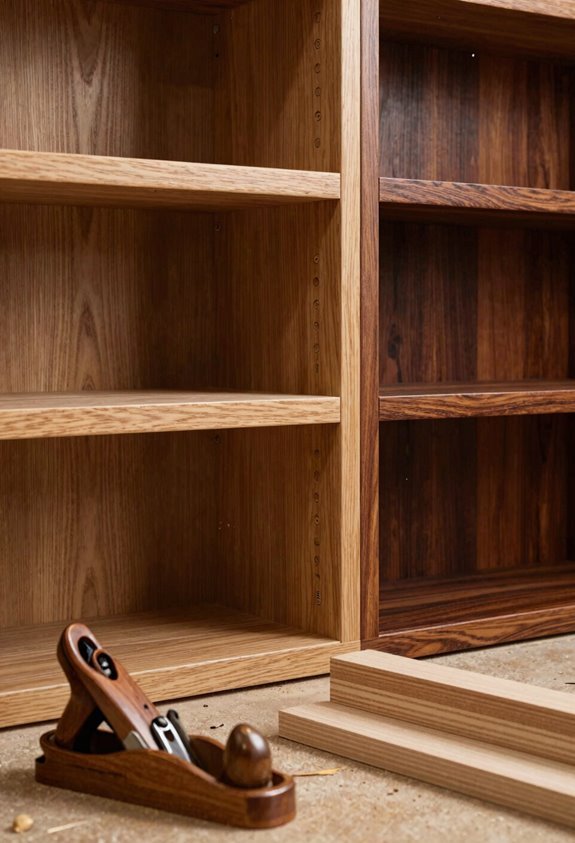
How do you build a shelf that stays put without wobbling or sagging? You’ll use dado and rabbet joints, the key tools of shelving and cabinetmaking.
A dado joint cuts a rectangular groove across a board’s grain, letting shelves slide in securely. Keep the depth to one-third of your board’s thickness; go deeper and you’ll weaken the wood.
A rabbet joint works differently. It’s a notch along an edge that lets pieces sit flush while creating a larger glue surface for strength.
Together, they’re unbeatable. The dado joint provides shelf support, while rabbet joints secure back panels and connect sides. This combination maximizes your glue surface and keeps everything aligned properly. Master this joinery, and your cabinetry won’t just look professional, it’ll last for generations.
Tongue and Groove: Seamless Panels and Flooring
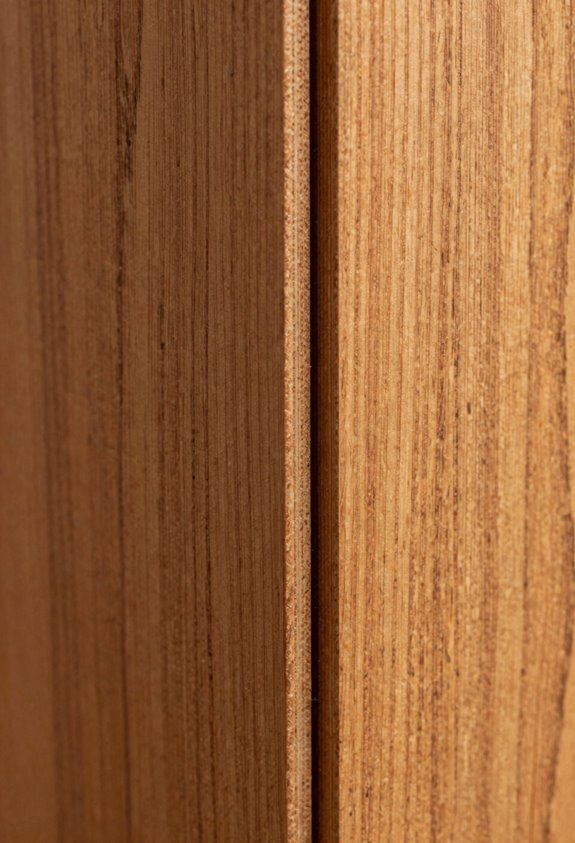
While dado and rabbet joints excel at building sturdy cabinets, there’s another joint that works well when you’re creating smooth surfaces: the tongue and groove.
I find this interlocking joint perfect for flooring and panels. Here’s how it works: a tongue (the protruding part) on one board slides into a groove (the recessed part) on the adjacent board. This creates continuous alignment and a strong glue surface that prevents gaps.
| Application | Board Type | Tongue Thickness | Benefit |
|---|---|---|---|
| Hardwood Flooring | Pre-cut | ¼” | Professional finish |
| Beadboard Paneling | Custom | ⅛”-¼” | Seamless appearance |
| Tabletops | Solid wood | ¼” | Enhanced stability |
| Wall Panels | Multiple boards | Variable | Prevents misalignment |
The standard tongue measures about one-third of your wood’s thickness. For ¾” boards, you’ll get a ¼” tongue. You can reverse configurations with the groove on one piece and the tongue on the other, depending on your design.
Multiple boards interlock smoothly across larger installations, creating that professional, unified look you’re aiming for.