Picture yourself finishing a cutting board in a climate-controlled unit instead of your cramped garage.
Setting up woodworking in a storage space sounds straightforward, but there’s a catch: you’ll need to navigate facility rules, power limitations, and dust control before you can even unpack your first tool.
The good news? It’s totally doable if you know what questions to ask first.
Is a Storage Unit Right for Your Woodworking?
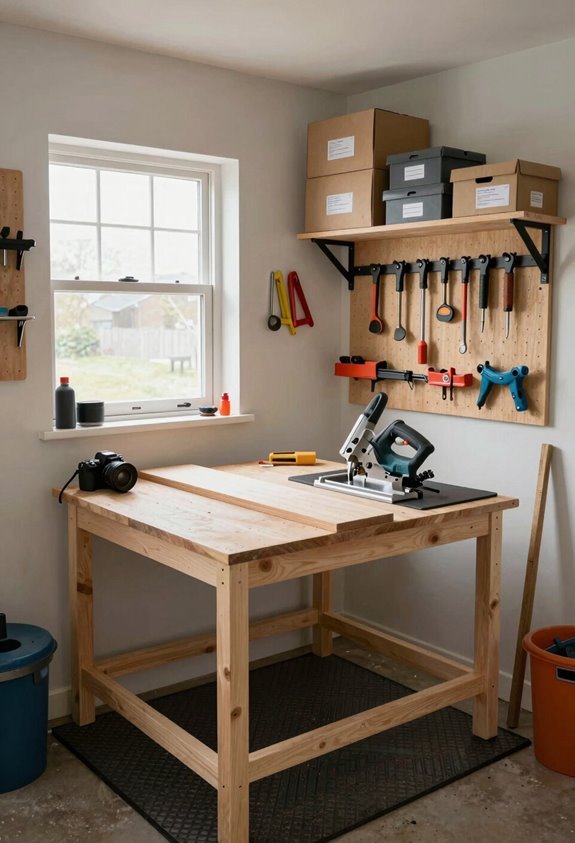
Before you haul your tools and lumber into a storage unit, you’ll want to ask yourself: does this space actually work for what you’re trying to build?
Storage facilities aren’t one-size-fits-all for woodworking. Here’s what matters:
Policy Check
Your facility may allow light woodworking but prohibit business use or high-heat operations. Some ban anything creating significant fire risks or heavy fumes. Call ahead, don’t assume.
Power & Space
You’ll need reliable electricity with outlets that won’t trip breakers under tool load. Measure your unit’s floor space carefully; cramped quarters limit your work.
Climate & Ventilation
Dust buildup and moisture fluctuations damage wood and your lungs. Poor ventilation turns your workspace into a health hazard.
Insurance & Lease Terms
Check your lease and homeowner’s policy. Owner approval protects you legally.
Consider these factors honestly before committing.
Questions to Ask Your Storage Facility Before You Start
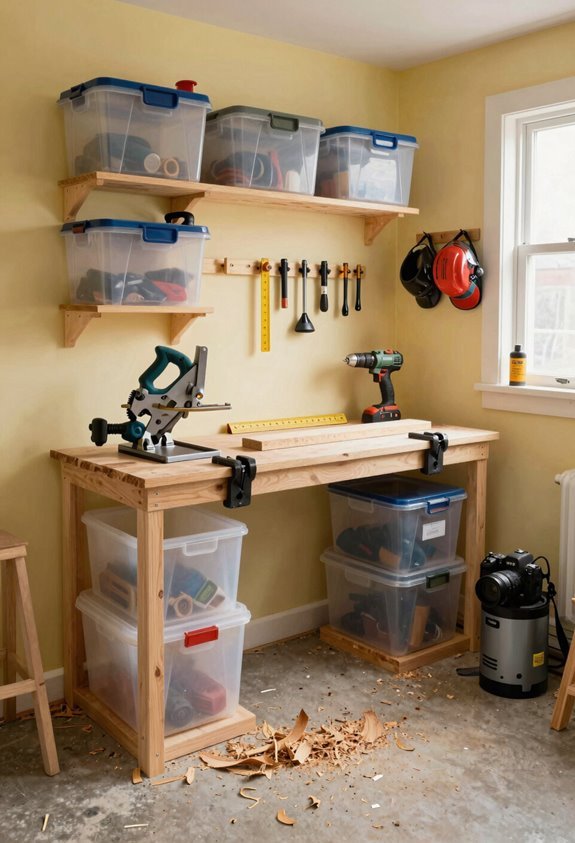
Before you move your tools in, you’ll need to ask your storage facility some important questions about what’s actually allowed and what’s available. I’d recommend confirming three main areas: whether workshop activities are permitted at your location since policies differ, what electrical setup they offer and if you can get a separate meter, and what the physical space gives you in terms of size, access, and climate control.
Getting these answers upfront saves you from discovering later that your facility doesn’t allow power tools or that you can’t fit your workbench through the door.
Policy Approval and Restrictions
Have you actually checked with your storage facility about whether woodworking is allowed? Most storage unit policies vary significantly by location, so I’d confirm before setting up shop. Ask about restrictions on equipment operation and commercial activity; some facilities prohibit both entirely.
| Restriction Type | What to Ask |
|---|---|
| Equipment Use | Can I operate power tools? |
| Business Activity | Is woodworking for sale permitted? |
| Safety Hazards | Are fire risks or fumes allowed? |
| Access Hours | When can I work in my unit? |
Request specifics about noise limitations, ventilation requirements, and fire safety rules. High heat and sawdust create genuine concerns for facility managers.
Additionally, clarify whether your lease permits business activities or only personal crafting. Understanding these storage unit policies upfront prevents costly conflicts later and allows you to operate within guidelines.
Electricity and Power Capacity
How much electrical power can your storage unit actually handle? I’d ask your facility manager directly about:
- Available electrical outlets in your unit and their locations
- Circuit capacity limits (most units offer 15-20 amps standard)
- Whether you’ll need a dedicated meter for heavy tool usage
- Billing structure: is electricity included in rent or metered separately?
Before plugging in compressors or dust collection systems, confirm what equipment the facility permits. Some places restrict high-amperage tools that strain their systems. I’d also ask about surge protector recommendations to protect your equipment from power fluctuations.
Understanding these specifics prevents unexpected shutdowns during your projects and keeps you compliant with facility rules.
Facility Features and Access
What makes a storage unit suitable for woodworking goes way beyond having enough square footage? You’ll want to ask your storage facility about access hours; can you work evenings and weekends when inspiration strikes? Check whether the unit has drive-up access so you can easily load lumber and finished pieces.
Security matters too. Ask about gated entry, cameras, and lighting in parking areas. Inquire about noise restrictions since power tools create sound. Some facilities limit operating hours. Clarify what tools and equipment they permit.
Ask about waste disposal for wood scraps. Finally, understand their insurance requirements. Some storage facilities require additional coverage for workshop activities. Getting these answers upfront prevents costly conflicts later and helps your woodworking setup run smoothly.
Choose the Right Unit Size for Your Needs
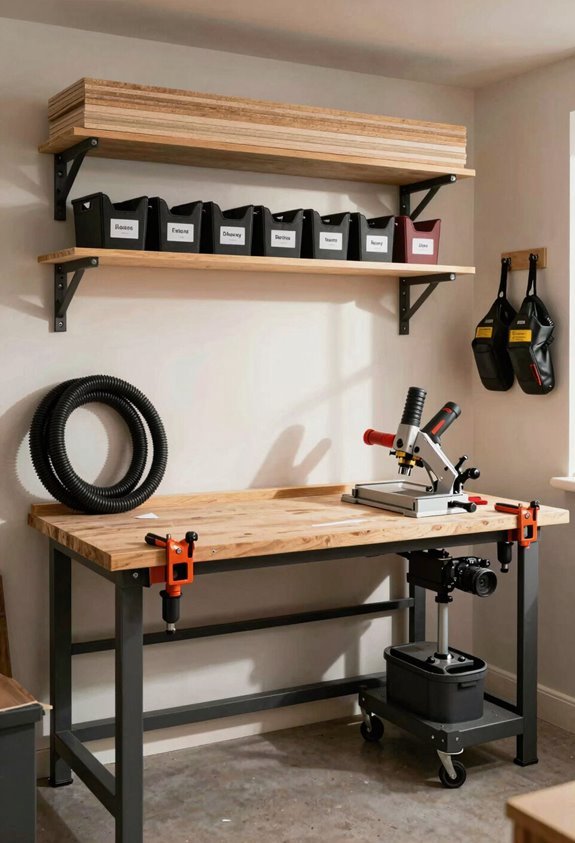
The foundation of your storage unit workshop starts with picking the right size, and it’s easier than you’d think if you match your space to your actual needs. For woodworking, you’ll want at least a 1020 or larger unit because tools like table saws and workbenches demand room to operate safely. I recommend measuring your equipment first: your largest tool plus workspace around it.
A 1020 gives you roughly 200 square feet, enough for serious projects without wasting money on excess storage space. If you’re doing smaller crafts, a 1010 or 1015 works fine. Don’t underestimate drive-up access either; it makes hauling lumber and dusty materials way easier than struggling through hallways.
Will Your Unit Have Enough Power?
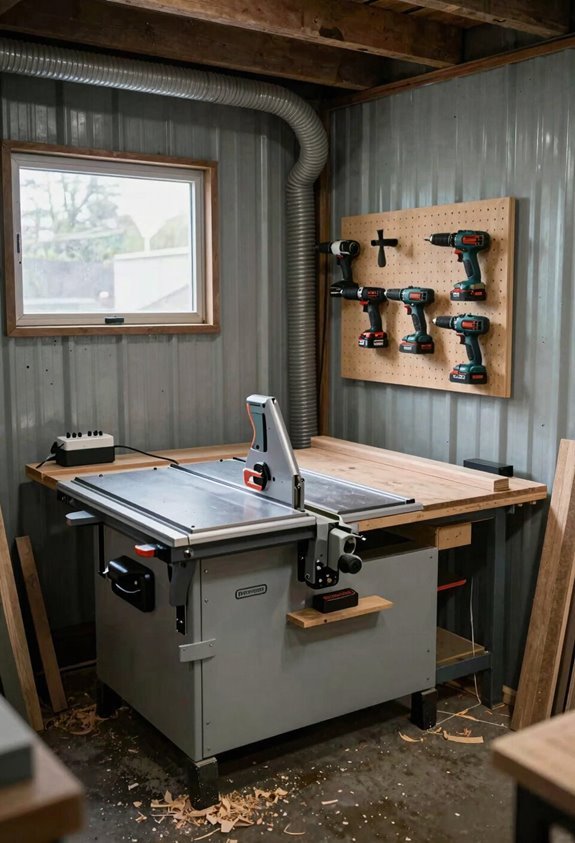
Before you plug in your first tool, you’ll need to figure out what kind of electrical setup your storage facility actually offers because not all units are created equal regarding power.
Some units have dedicated outlets and power meters. Others have nothing. This matters significantly when you’re running power tools like planers or compressors, which demand serious electricity.
| Unit Type | Power Available | Best For |
|---|---|---|
| Outlets included | Full access | Heavy-duty power tools |
| No outlets | None | Cordless tools only |
| Limited circuits | Restricted | Light equipment |
Heavy tools trip breakers easily. Surge protectors help, but they’re not permanent solutions.
Ask your facility about electricity rules and monthly billing before committing. Know your power situation upfront; it’ll determine what equipment you can actually use.
Lay Out Your Workspace: Bench, Tools, and Zones
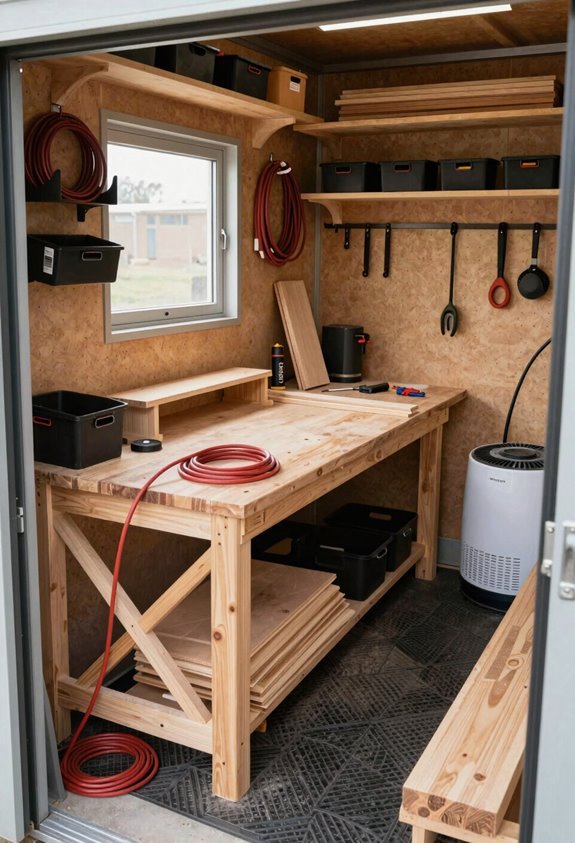
You’ll want to position your workbench near a power source so you can plug in tools and chargers without running extension cords across your workspace. I’d recommend organizing your space into distinct zones: a central work area for your bench, a cutting zone, a sanding station, and an assembly spot so you’re not constantly moving materials back and forth.
Smart storage like wall-mounted pegboards and vertical lumber racks keeps everything accessible while freeing up floor space for safe movement.
Workbench Placement Strategy
How do you arrange a woodworking space when square footage is limited? I place my workbench in the storage unit’s center, ensuring at least 3 feet of clearance on all sides. This breathing room lets me operate tools safely and move materials without cramping my style.
I position the bench away from walls so I can walk completely around it. This setup prevents accidents and makes handling long boards manageable.
Next, I arrange power tools in a logical sequence: planer, then saw, then sanding station, flowing naturally from one task to the next. I keep cords organized with surge protectors to avoid tripping breakers. Nearby, I position vertical lumber racks along walls, keeping boards accessible but off the floor. This layout makes my storage unit into a functional workshop where everything has its place.
Tool Storage Organization
With your workbench centered and power tools arranged in sequence, now I’ll organize the supporting cast: hand tools, lumber, and small parts.
I’ve found that vertical storage organization makes a cramped space into an efficient workshop. Here’s what works:
- Wall-mounted pegboards and vertical lumber racks keep hand tools visible and accessible while keeping wood off the floor, preventing moisture damage
- Labeled bins and rolling carts let me move frequently used items between zones without creating clutter or blocking movement
- Dedicated hardware refill area with organized drawers for screws, nails, and fasteners saves time during projects
This tiered approach maximizes your floor space while keeping everything within arm’s reach. You’re creating zones that flow naturally, with tools staying accessible, materials staying protected, and you staying in control of your workspace.
Movement And Safety Zones
Where does traffic flow in your storage unit workshop? I’ve learned that creating clear pathways keeps you safe and productive. You’ll want at least 3 feet of open floor space around your bench for movement and tool access. I position vertical lumber racks along perimeter walls, which keeps transit paths completely clear and prevents tripping hazards.
| Zone Type | Location | Purpose | Storage facility safety |
|---|---|---|---|
| Work Area | Center | Primary bench setup | Easy access |
| Tool Zone | Within arm’s reach | Labeled bins nearby | Reduced clutter |
| Transit Path | Perimeter | Open walkway | Clear passage |
| Machine Area | Away from bench | Vibrating tools | Noise isolation |
I install portable dust collection near my bench to manage debris at the source. Separating noisy tools with anti-vibration mats protects both your workspace and your focus.
Control Dust in Your Storage Workshop
Because sawdust spreads like pollen in a confined space, managing dust becomes your biggest challenge when woodworking in a storage unit.
Sawdust spreads like pollen in confined spaces, making dust control your primary challenge when woodworking in a storage unit.
Dust control requires a multi-layered approach. Here’s what works:
- Invest in a portable dust collector or bagless vacuum to capture sawdust immediately after cutting, preventing it from settling everywhere
- Elevate your wood and cutoffs on racks or shelving to keep materials off the floor, reducing dust contact with moisture that promotes mold
- Set up a semi-closed work area with clear containment around dust-generating tasks, like your saw station, to trap particles before they spread
I schedule regular cleanup sessions after each woodworking session. Sweeping floors and wiping surfaces keeps your storage-work area manageable. Installing a simple vertical lumber rack and pegboard keeps tools organized and easier to clean between uses.
Store and Protect Lumber Indoors
Once you’ve got your dust under control, protecting your lumber becomes your next priority. Proper moisture management is critical for preserving your wood.
I store my wood on risers or pallets to keep it off the concrete floor, which prevents moisture from creeping up into my stacks. I also use moisture meters to check my wood’s water content regularly, separating green wood (freshly cut) from kiln-dried stock (already dried in ovens).
| Storage Method | Best For |
|---|---|
| Horizontal stacking | New wood and plywood |
| Vertical racks | Dry lumber |
| Bins or shelves | Smaller pieces |
| Climate-controlled areas | All lumber types |
I keep my lumber storage space away from direct sunlight and maintain controlled humidity. Organizing by species and thickness helps me find exactly what I need while maximizing my limited space.
Set Up Tool Storage You Can Actually Use
How you organize your tools makes the difference between a functional workspace and an aggravating mess. I’ve found that smart storage keeps me efficient and safe.
Here’s what actually works:
- Install pegboards and labeled bins for small tools and fasteners. You’ll find exactly what you need without digging through clutter.
- Use wheeled carts and tool stands to move frequently used items around your workspace without straining yourself.
- Add portable dust collection near your work zone to keep air clean while you focus on projects.
I elevate everything off the floor using shelves or pallets, which prevents moisture damage and makes cleaning easier. Keeping your center workspace open and clear means you can move freely while working.
When your storage matches your workflow, woodworking becomes genuinely pleasant rather than frustrating.
Secure Your Equipment and Plan for Insurance
Before you move your first tool into that storage unit, you’ll need to handle some essential groundwork, and I mean that literally and legally. Insurance is your safety net here. Contact your insurance provider about adding coverage for your woodworking equipment and materials stored on-site. Many standard policies don’t cover workshop gear, so you’ll want a rider; basically an add-on that protects valuable items.
Document everything you bring in. Take photos and keep a detailed inventory listing tools, materials, and their values. This documentation supports any insurance claims if something gets damaged or stolen.
Store smart too. Keep lumber elevated off the floor to prevent moisture damage. Use locked cabinets for expensive tools and pegboards for organized access. These practices protect your investment while keeping your storage space liability-friendly.
When to Skip Storage and Get a Dedicated Workshop
Storage units have real limitations that might force you to reconsider your setup, especially if you’re running into power issues, poor ventilation, or insurance headaches regularly. A dedicated workshop gives you permanent benefits like built-in dust collection systems, reliable electricity, climate control, and wall space for mounting large tools. These are things that storage units simply can’t provide safely.
If you’re constantly struggling against your unit’s constraints rather than focusing on your actual woodworking, it’s probably time to make the jump to a real shop.
Limitations Of Storage Units
Why do so many woodworkers eventually abandon their storage unit setups? Storage limitations become real obstacles pretty quickly.
I’ve found that most units struggle with three critical issues:
- Power constraints: Limited outlets and weak circuits can’t handle multiple power tools simultaneously. You’ll trip breakers constantly, interrupting your workflow.
- Ventilation problems: Dust accumulation and fume buildup create unhealthy conditions. Inadequate airflow makes longer projects uncomfortable and potentially dangerous.
- Noise and policy restrictions: Many facilities prohibit sustained tool use due to noise complaints. Your lease likely forbids business operations entirely.
Additionally, most storage spaces aren’t engineered for heavy woodworking. Floor load capacity limits equipment placement, and long-term operations violate insurance policies.
You’ll eventually realize that storage units work temporarily, maybe for hobby projects, but they’re fundamentally incompatible with serious woodworking aspirations.
Benefits Of Dedicated Spaces
How much difference does the right workspace actually make? Honestly, it’s night and day compared to cramped storage units.
A dedicated workshop gives you what a storage unit can’t: proper ventilation that clears sawdust, electrical outlets for power tools, and climate control protecting your materials. You’ll appreciate organized tool storage with clear work zones, which are safety improvements that matter.
Public maker spaces offer shared workbenches, shelving, and equipment you’d otherwise buy yourself. This cuts startup costs significantly.
Here’s what seals the deal: adequate floor area for your equipment, dust management systems, and facility approval to actually operate woodworking. Storage units lack these essentials.
When you’re serious about woodworking, investing in a real workshop space improves your experience significantly. You’ll work safer, focus better, and create quality projects without compromise.
Compare Storage Units, Maker Spaces, and Shared Shops
When you’re thinking about where to set up woodworking, you’ve really got three main options to contemplate, and they’re pretty different from each other.
Each option brings different advantages to your woodworking journey:
Each woodworking setup option offers distinct advantages—weigh affordability, space, power, and community access against your specific needs.
- Storage Unit: Affordable and convenient, but limited power outlets, minimal ventilation, and noise restrictions make sawing and sanding challenging. Floor space gets cramped fast.
- Maker Space: Climate-controlled with proper ventilation, workbenches, and shared tools included. You’ll pay membership fees but gain access to community and safety features a storage unit simply can’t match.
- Shared Shop: Similar community benefits to maker spaces, though you’ll navigate owner approval and lease restrictions on workshop activities.
For serious woodworking, I’d recommend maker spaces or shared shops over a storage unit. Better airflow, appropriate electrical power, and safer layouts create the difference between frustration and actual progress.
Your First Week: Setup Checklist and Timeline
You’ve picked your space—now comes the real work of making it actually function. Your first week sets the foundation for everything ahead, so don’t rush it.
Start by contacting your facility about workshop rules, access hours, power availability, and ventilation. You’ll need this information before moving anything in.
Next, map out your storage unit setup with zones: cutting area, assembly station, finishing zone, and storage. This organization prevents chaos and keeps you safe.
Position lumber racks along walls and install pegboards for tool access. Arrange a center open area for movement.
Install portable dust collection immediately; position it downwind from work zones. This tackles air quality from day one.
Finally, audit your power needs. List tools, check available outlets, and test circuits to prevent overload.