Wood furniture deserves attention, wood finishes deserve respect, and your favorite pieces deserve to last. You’re probably using the wrong cleaner right now, and I’m here to show you why.
The difference between a lacquer finish and polyurethane might seem small, but it’s the gap between furniture that gleams for years and surfaces that get damaged in weeks.
Let me walk you through what actually works.
Know Your Finish Type First
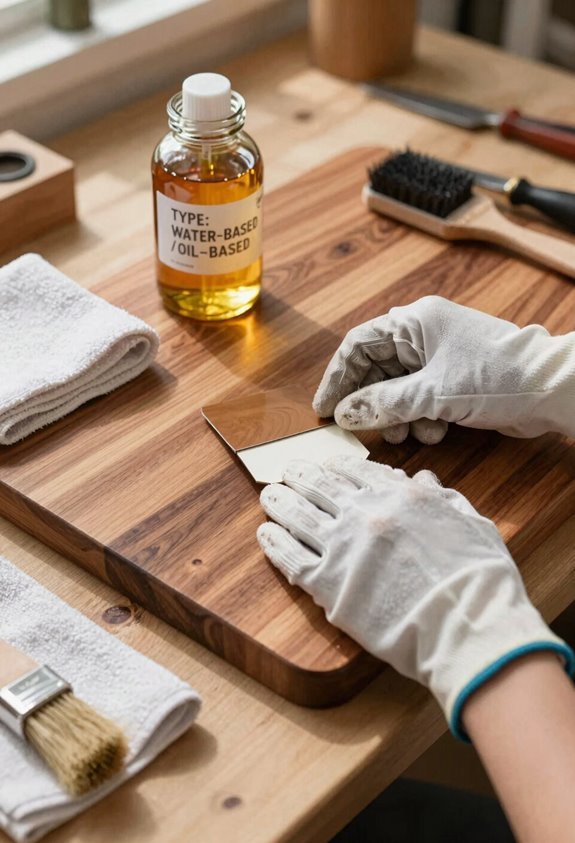
Identifying your furniture finish is the expert-level step that keeps your pieces looking fantastic for a lifetime.
Why does your furniture care routine matter so much? Because identifying your finish is the expert-level step that keeps your pieces looking fantastic for a lifetime. I’ve learned that finishes speak their own language, and you’ll want to become fluent.
Hard, sealed surfaces like lacquer and polyurethane require different finish-specific care than soft, penetrating finishes such as oil-based coatings. Here’s what matters: match your maintenance routine to the finish, not the solid wood underneath.
Using wrong cleaning products can cause lasting damage that’s tough to reverse. That’s why I recommend these steps:
- Identify your finish first
- Avoid harsh chemicals
- Use appropriate products for your specific finish
- Follow regular care guidelines
Since 1978, experts have guided homeowners through this process. You can handle this.
Daily and Weekly Care for Your Wood Furniture
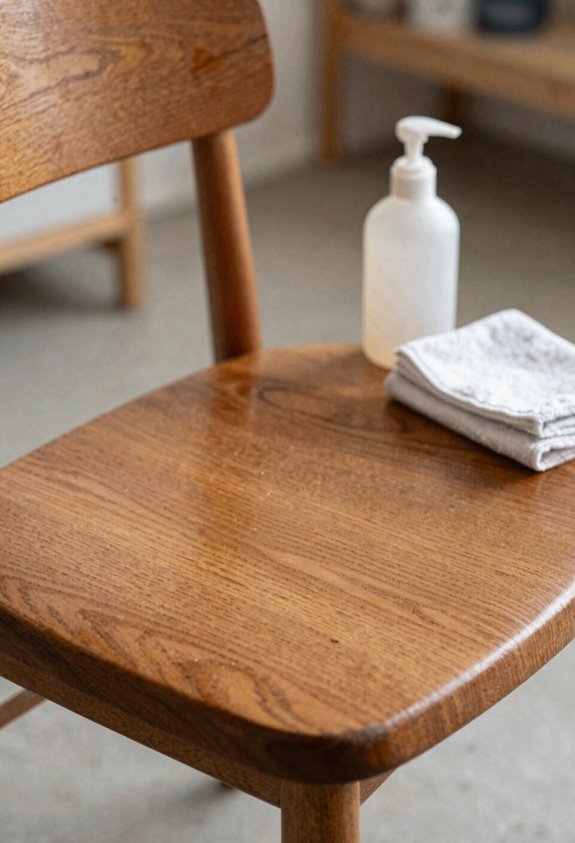
How often should you actually be touching your wood furniture? More than you’d think, honestly. I dust my pieces several times weekly using a soft microfiber cloth, this removes abrasive particles that cause micro-scratches. When spills happen, I blot immediately rather than rubbing, preventing moisture from penetrating the wood and causing stains.
I use a wood cleaner matched to my finish type, never all-purpose cleaners that can damage the surface. I always wipe with the grain, then dry thoroughly to maintain that protective luster.
Weekly, I inspect surfaces for scratches or wear. For minor damage, I use a wood touch-up pen or light sanding followed by polishing. I also rotate decorative items to prevent uneven fading and light spots. This routine keeps my furniture looking great.
Match Products to Your Finish
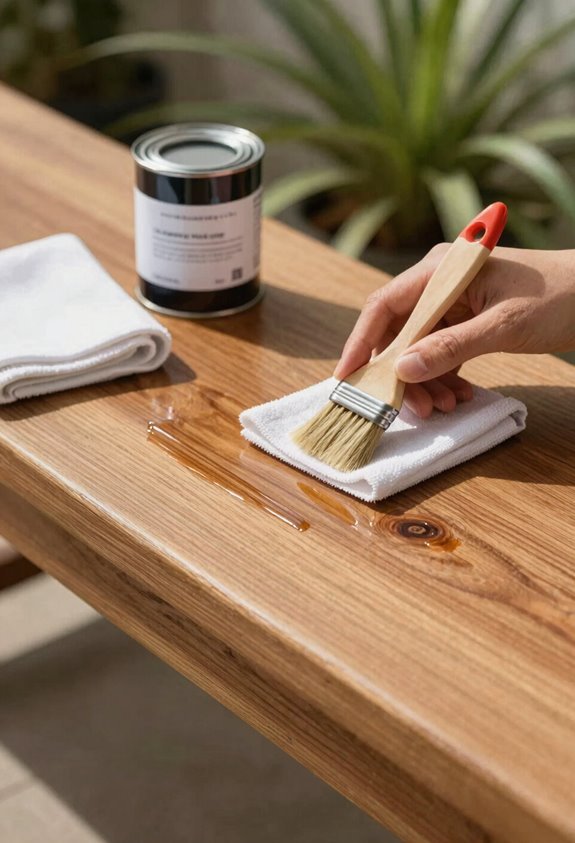
Your daily dusting routine works great, but it’s only half the battle. The products you choose matter just as much as how often you clean. I’ve learned that finish compatibility is everything, and using the wrong cleaner can actually damage your furniture.
Here’s what I do to keep my wood surfaces in top shape:
- Identify your finish first: is it lacquer, polyurethane, or oil?
- Match cleaners carefully: gentle cleansers for oiled finishes; avoid all-purpose products
- Never use oil-based polish on lacquered surfaces: it creates a greasy film that attracts dust
- Reapply appropriate products every six to twelve months: furniture oil maintains surface integrity
Getting your maintenance routine right protects your investment. When you understand your specific wood finishes, proper care becomes automatic, and your furniture stays beautiful for years.
Guard Against Water, Heat, and Humidity Shifts
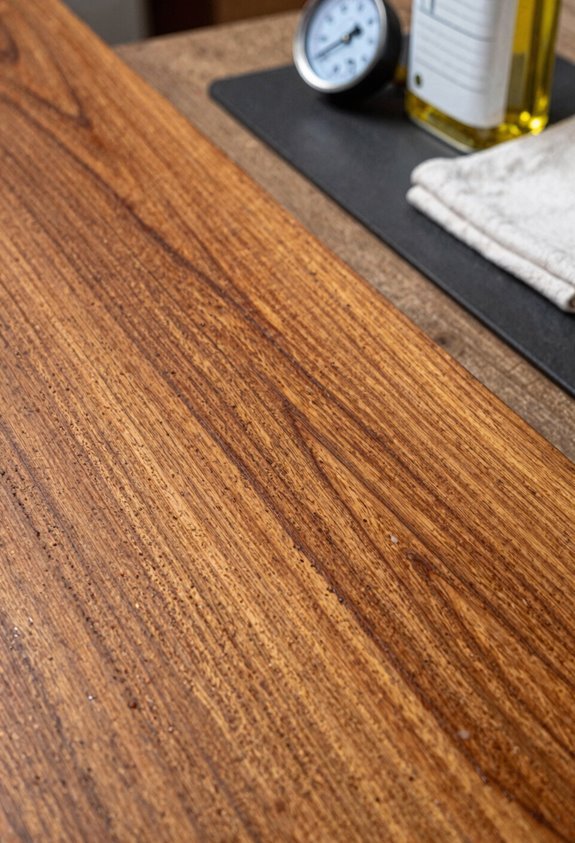
Since wood inherently absorbs and releases moisture from the air around it, changes in humidity can cause real problems for your furniture. I’ll help you maintain stable conditions that protect your pieces from warping and cracking.
| Season | Tool | Goal |
|---|---|---|
| Winter | Humidifier | Add moisture to dry air |
| Summer | Dehumidifier or AC | Remove excess moisture |
| Year-round | Monitor | Keep 40-60% humidity |
Here’s what I recommend: Wipe spills immediately by blotting gently, then dry completely. Keep furniture away from heaters and radiators, which cause rapid moisture loss.
Use climate control consistently. Humidifiers combat winter drying while dehumidifiers prevent summer swelling. Check your environment regularly. When you intercede quickly with these strategies, you’re protecting your wood’s joints, finishes, and overall integrity for years ahead.
When to Refinish Your Wood Furniture or Call a Professional
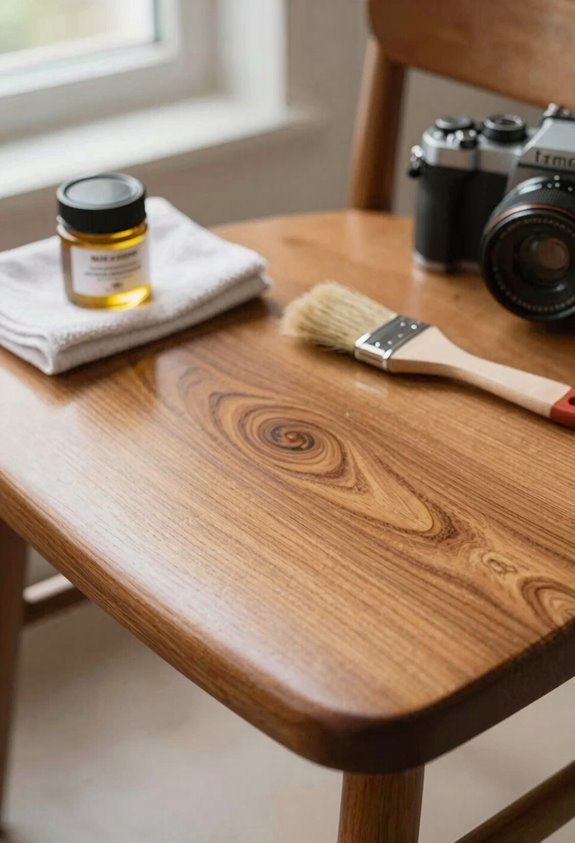
As your wood furniture ages, it’ll eventually show signs of wear, and that’s when you need to decide: can I fix this myself, or do I need a professional?
I’d recommend calling an expert when you encounter:
- Deep damage – Gouges or cracks revealing bare wood beneath the finish need professional filling and finishing skills
- Extensive finish damage – Large peeling, cracking, or alligatoring (crazing patterns) indicates serious problems requiring expert restoration
- Structural issues – Wobbly legs or loose joints compromising stability demand professional attention before any refinish work
- Significant burns or dark stains – Deep discoloration often requires professional treatment rather than DIY fixes
Before refinishing, confirm your piece is solid wood. Sometimes professional restoration preserves the original history and patina better than refinishing does.
When in doubt, consult an expert. It’s worth protecting your treasured pieces.