Imagine you’ve got a Saturday afternoon free and want to build something with your hands, maybe a simple cutting board or a small shelf. Nick Offerman’s woodworking books can get you there, but not all of them start at the same place.
I’ve found three that work best for beginners because they teach you the right mindset while building real skills. Here’s what makes them different, and why one might fit your style better than the others.
Good Clean Fun: Step-by-Step Projects for Every Skill Level
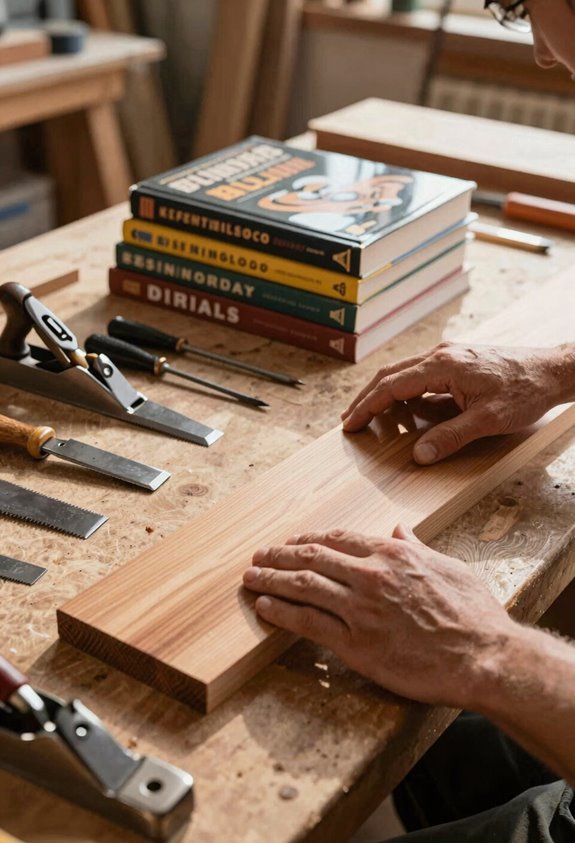
What makes this book special for beginner woodworkers is its accessibility. Projects span simple, intermediate, and challenging levels, so you’ll find something right for your skill. Though Nick Offerman contributes only two projects, contributors from Offerman Woodshop provide the rest, sharing their expertise through step-by-step photos and illustrations.
Beyond instructions, you’ll discover memoir-style stories, mentorship insights, and profiles of notable woodworkers. This community woodworking approach builds confidence while keeping things entertaining, perfect for starting your woodworking journey.
Little Woodchucks: Building Confidence With Tools and Fundamentals
The book tackles woodworking for beginners by emphasizing safe tool handling before diving into projects. You’ll build confidence with tools through simple, achievable beginner projects that reinforce fundamental techniques. Rather than overwhelming you with complex designs, Offerman focuses on basic tool skills, the foundation every woodworker needs.
What makes *Little Woodchucks* stand out? It treats learning as fun. Whether you’re a curious kid or skeptical adult, this accessible companion proves that making things yourself isn’t just possible. It’s enjoyable when you start small and build your skills deliberately.
Why Offerman’s Books Teach Mindset Alongside Technique
Because woodworking isn’t just about cutting wood and assembling pieces, Offerman’s books blend practical instruction with deeper lessons about patience, persistence, and your relationship with making things. His leadership approach teaches you that developing a learning mindset matters as much as mastering hand tools.
Offerman’s woodworking philosophy centers on self-improvement through community and mentorship. He shows you that beginner-friendly projects build confidence while shaping how you think about challenges. Rather than rushing toward fancy machinery, you’ll learn to respect fundamentals: understanding wood grain, tool control, and problem-solving techniques.
This mindset shift changes you from someone following instructions into a thoughtful maker. You’ll discover that each project teaches resilience, attention to detail, and appreciation for craftsmanship itself. That’s where real skill blooms.