I’ve tested dozens of CA glues on everything from inlays to guitar repairs, and I’ll be honest: not all of them perform the same way on wood. You’ve probably noticed that some bottles clog within weeks while others stay reliable for months.
The difference comes down to specific formulations, storage methods, and knowing which viscosity (thickness) matches your project. Let me show you what separates the winners from the duds.
What Makes CA Glue Right for Woodworking Projects
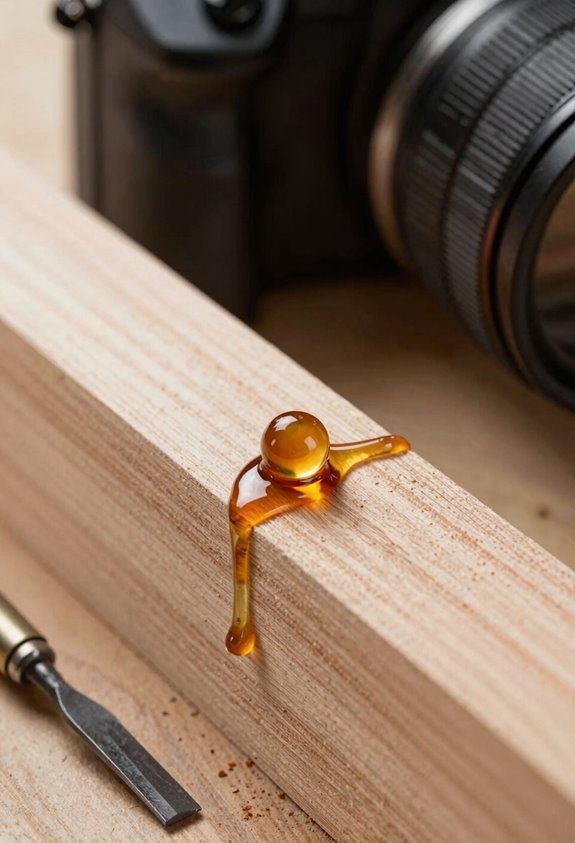
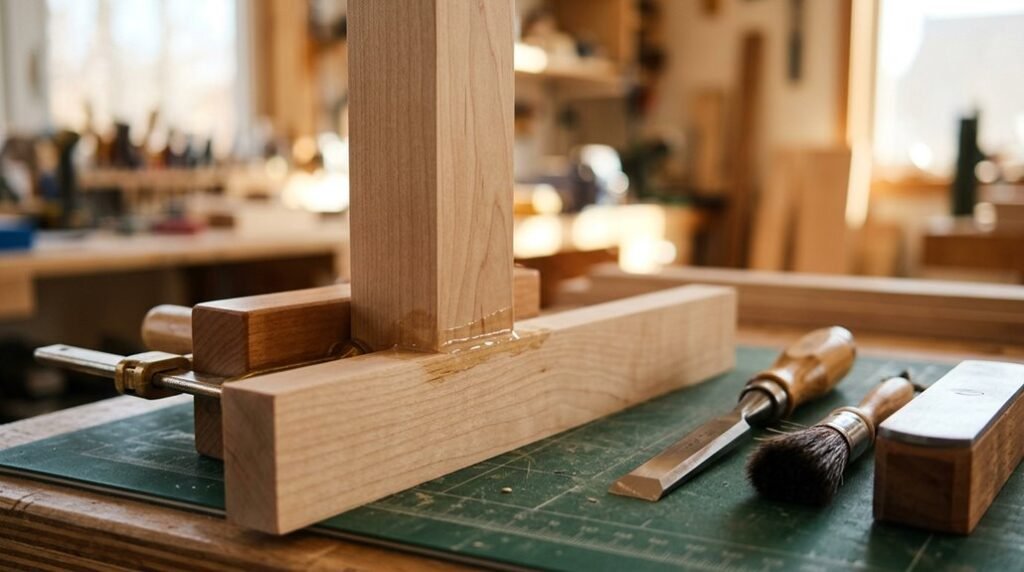
Why do woodworkers keep CA glue in their shops when they’ve got traditional wood glues? Because CA glue does something special: it wicks into hairline splits and complex joints that other glues can’t reach. I’ve found that products like Starbond Medium work incredibly well for this job, especially when you need a one-coat gloss finish.
CA glue gives you speed and precision. It sets in seconds, not hours. You’re not clamping forever or waiting overnight. That’s a significant advantage when you’re fitting intricate pieces together or repairing fine cracks.
The real advantage happens in tight spaces. While traditional glues need gap-filling room, CA glue actually hunts down those microscopic openings, bonding them from the inside out. That’s why serious woodworkers consider it essential, not optional.
Top Brands: Starbond, StewMac, and Why Akfix Underperforms
When I’m selecting CA glue for serious woodworking, I compare three contenders that consistently show up in every woodworker’s toolkit. Starbond and StewMac dominate the market because they’ve engineered their formulas for the precision work we demand. Starbond’s anti-clog caps and multiple application tips give me control over how the glue flows into tight joints, while StewMac’s consistent open time (the window before the glue sets) makes it reliable across different wood types and temperatures.
Akfix 705, on the other hand, I’d skip. Users report it clogs easily, doesn’t wick into micro-cracks the way quality CA glues should, and its cheaper construction means less predictable results when I’m working on fine furniture where durability matters.
Starbond’s Industrial-Grade Reliability
How’d you like a CA glue that actually stays usable for two and a half years?
That’s Starbond’s difference: a 30-month shelf-life warranty backing industrial-grade reliability. You’re getting clear safety data and honest composition information, stuff you won’t find scattered across every competitor’s label.
Here’s what sets it apart:
- Longer usability window – Your bottle stays potent when you need it
- Transparent formulation – You know exactly what you’re applying
- Proven performance – Woodworkers consistently trust it for detail work
I’ve watched folks grab Starbond specifically because that shelf-life guarantee means less waste and more predictability. You’re not gambling on whether your glue’s still active after sitting in the shop for months.
That reliability matters when you’re investing in quality results.
StewMac’s Preferred Performance Standards
Once you’ve got Starbond locked down as your baseline, it’s time to see how StewMac actually stacks up because benchmarking matters when you’re choosing between top performers.
I’ve found StewMac delivers what woodworkers need:
- Controlled application – The delivery system lets you place glue exactly where it belongs without mess
- Reliable open time – You get consistent working windows matching Starbond’s performance for hairline joins
- Minimal clogging – The formula stays usable bottle after bottle
StewMac meets the performance standards we expect: around 10–15 second cure times and dependable results on filler tasks. Unlike Akfix 705, which feels cheap and frustrates users with difficult handling, StewMac justifies its place among top brands.
When you’re joining delicate wood pieces, you want glue you can trust. StewMac earns that trust through tested, consistent performance.
Akfix’s Quality Control Issues
Why does Akfix 705 underperform compared to Starbond and StewMac? Quality control issues plague Akfix, creating inconsistencies that frustrate woodworkers. I’ve noticed viscosity varies between bottles, tips clog unpredictably, and open times don’t match expectations. This unreliability wastes your time and compromises joints.
| Feature | Akfix 705 | Starbond | StewMac |
|---|---|---|---|
| Viscosity Consistency | Variable | Stable | Stable |
| Clog Prevention | Poor | Antoclog caps | Replaceable tips |
| Open Time Reliability | Unpredictable | Predictable | Predictable |
| QC Standards | Inconsistent | Rigorous | Rigorous |
| Professional Trust | Lower | Higher | Higher |
Starbond and StewMac maintain stricter quality control processes. Their delivery systems, antoclog caps and replaceable tips, prevent frustrating failures.
When you’re joining precious wood pieces, you need glue you can rely on. Testing bond strength before critical projects helps, but investing in proven brands saves headaches long-term.
Thin vs. Medium vs. Gel: Pick the Right CA Viscosity
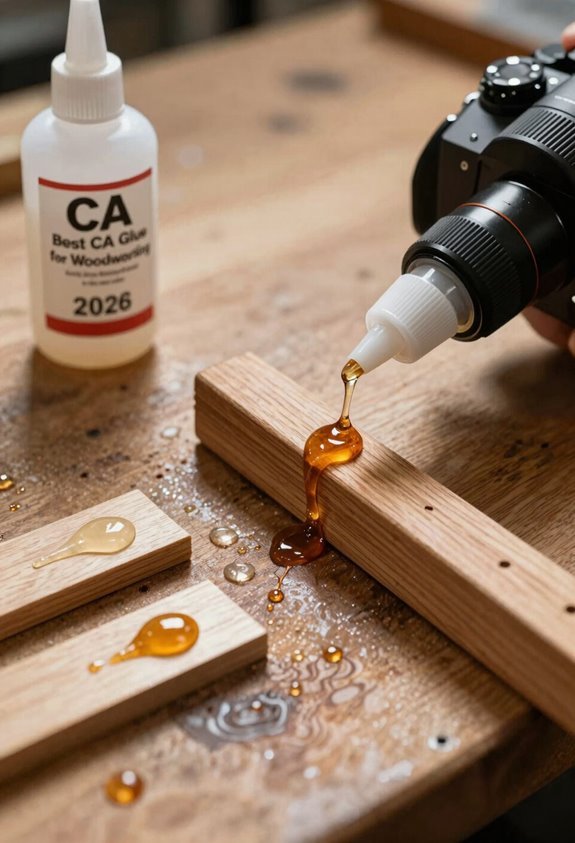
I’ve found that choosing between thin, medium, and gel CA glues comes down to three key factors: how much control you need during application, how fast you want the glue to set, and what kind of gaps you’re filling.
Thin CA flows quickly into hairline cracks and cures in seconds, but it can drip and clog nozzles if you’re not careful. I save this for precise veneer work and delicate joints. Medium CA gives you breathing room with a slower set and better handling strength, making it my go-to for most everyday woodworking tasks. Gel CA sits thicker, resists running, and fills larger voids without wicking into tight spaces the way thinner versions do.
Viscosity Affects Application Control
How do you know which CA glue thickness will work best for your woodworking project?
Viscosity—that’s the fancy term for how thick or thin a glue is—directly controls how you apply it and where it goes. Here’s what matters:
- Thin CA wicks into hairline cracks instantly but runs easily on vertical surfaces
- Medium CA balances speed with control, ideal for larger joints where you need a few extra seconds
- Gel CA stays put on steep angles and won’t drip, though it cures slower
Matching viscosity to your surface prevents frustration. For complex joints with movement, I use thin CA first to bond everything, then follow with thicker CA for filling gaps.
This blend approach gives you the best of both worlds: strong adhesion and a clean finish.
Curing Speed And Open Time
The moment you apply CA glue, a clock starts ticking. Understanding that clock is essential for woodworking success. Thin CA glue cures fastest, perfect for stable joints where you need instant bonding. Medium CA strikes a balance: it gives you more working time while still setting reliably.
Gel CA moves slowest, letting you position pieces longer before cure kicks in. Your humidity and temperature matter too. Higher moisture speeds up curing, sometimes frustratingly fast.
That’s why woodworkers pick viscosity based on their needs: thin for quick joints, medium for typical work, gel for gaps requiring patience. Match your CA glue choice to your project’s timeline, and you’ll stay in control rather than rushing against the clock.
Material Compatibility By Thickness
Once you understand curing speed, the next decision is matching your CA glue’s thickness to your specific joint.
I’ve found that picking the right viscosity makes a real difference in your results. Here’s what works:
- Thin CA glue – Use this for tight hairline cracks where you need fast penetration and quick initial set
- Medium viscosity – Choose this for typical woodworking joints; it balances gap-filling with controlled flow without running everywhere
- Gel CA – Pick this for vertical surfaces or larger gaps where you need extended working time
For irregular gaps, I combine viscosities strategically: thin CA for capillary action, then thicker formulas for filling. This two-stage approach creates stronger, more durable bonds.
Match your glue’s thickness to your joint’s size, and you’ll join the ranks of woodworkers who get consistently good results.
Cure Speed vs. Open Time: Finding Your Balance
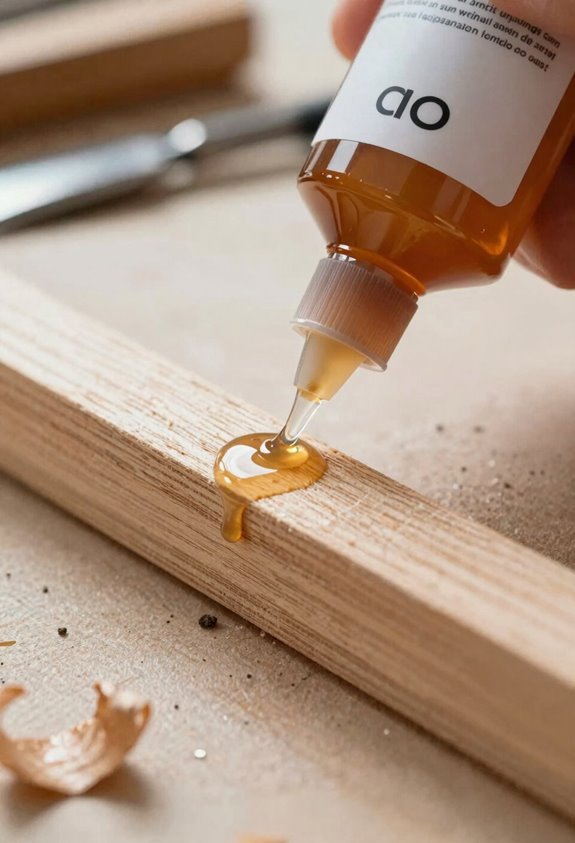
When you’re deciding between a CA glue that sets in seconds versus one that gives you nearly a minute to work, you’re really choosing between speed and control.
Fast CA glue brands like Starbond cure in 10–15 seconds, perfect when you need instant results. But here’s what I’ve learned: longer open times around 40 seconds actually help you align pieces carefully and reduce surface cracking on wood and plastic.
The trade-off matters. Accelerators speed curing but can make joints brittle over time. I skip them when possible, letting CA dry naturally creates stronger, more durable bonds.
Humidity affects everything too. Moisture speeds curing and increases clogging risk, so controlling your workspace helps maintain predictable timing.
Test different brands on your actual materials first. That’s how you’ll find your perfect balance between speed and workability.
Where to Use CA Glue in Your Woodworking
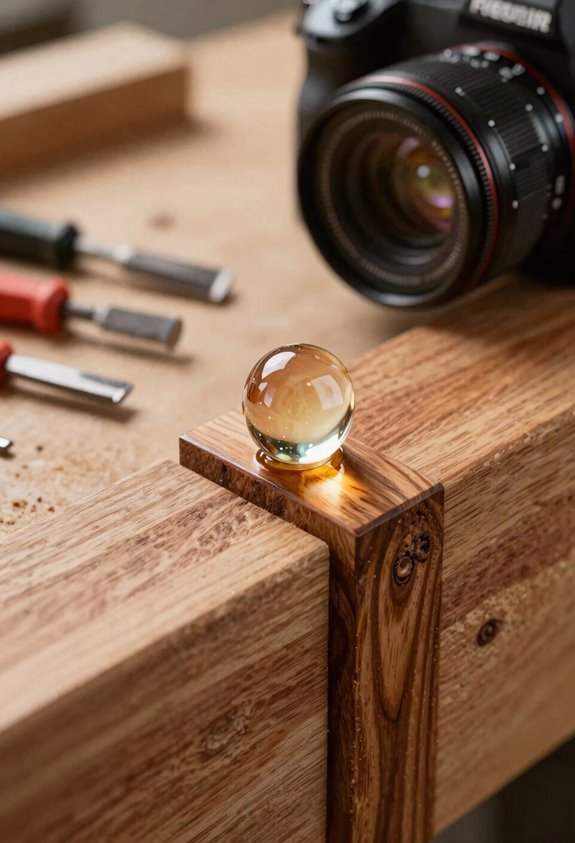
Where does CA glue actually shine in your workshop?
You’ll get the best results when you strategically target CA glue’s strengths. I’ve found it works beautifully for specific applications where its properties matter most:
- Hairline splits and complex joints – CA glue wicks into tight spaces, creating a one-coat glossy finish without extra sanding
- Small defects and gaps – It fills minor imperfections while delivering that polished look you’re after
- Delicate inlays and edge-joinery – Precision delivery tools like microtips let you control application and minimize squeeze-out
Here’s the catch: avoid CA glue for larger pieces or wood that moves seasonally. Instead, reach for slower-open-time variants that accommodate shifts.
Temperature and humidity affect workability significantly. Higher humidity near warmth increases clogging risk. When you master these applications, you’ll join woodworkers who trust CA glue exactly where it belongs.
Store CA Glue So It Actually Lasts Years
CA glue’s precision and speed make it invaluable for those tight joints and delicate inlays, but none of that matters if your bottle hardens into a useless lump. I’ve learned that refrigeration is an effective method for extending shelf life significantly. Here’s my proven system:
CA glue’s precision and speed are worthless if your bottle hardens into a useless lump. Refrigeration extends shelf life dramatically.
Storage essentials:
- Keep bottles in airtight mason jars with desiccants (moisture-absorbing packets)
- Store in your fridge to slow degradation dramatically
- Always cap tightly between uses
Maintenance tips:
- Tap containers regularly to clear clogged tips
- Remove tips for cleaning when not in use
- Use microtips to minimize waste
I’ve kept CA glue usable for years using these practices. The investment in proper storage pays off, and you’ll stop watching expensive bottles turn into solid waste.
Stop Your Tips From Clogging: What Really Works
How frustrating is it when your CA glue tip clogs right in the middle of a project?
I’ve found these strategies actually work:
- Clean your spout after each use – This simple habit prevents dried glue buildup that blocks flow.
- Use replaceable microtips – Starbond’s microtips work really well. When one clogs, you swap it out instantly instead of wasting time troubleshooting.
- Keep caps on tight – A secure cap maintains an airtight seal, preventing moisture from entering and clogging your tip.
Beyond these essentials, I tap the container base gently to clear interior blockages. I also store CA in mason jars with desiccants (moisture absorbers) to extend shelf life and reduce clogs significantly.
Having multiple viscosities—thin, medium, and thick—lets me choose the right formula for each joint, reducing clog problems altogether.
Test CA Glue on Scrap Wood Before Committing
I’m going to walk you through why testing CA glue on scrap wood first saves you from expensive mistakes; what works great on one type of wood might fail on another, and you’ll want to catch that before your actual project.
You’ll discover how the glue performs with your specific wood mix (hardwood versus softwood, end grain versus edge grain), how fast it actually sets in your hands, and whether it leaves stains or creates heat spots that will affect your finish.
Why Testing Matters First
Why rush into a project without knowing how your glue will actually behave?
CA glue testing on scrap wood reveals critical details before you commit to your masterpiece. Here’s what matters:
- Open time verification – You’ll discover your actual working window, often 10–15 seconds with quality brands, under your shop’s humidity and temperature conditions.
- Bond strength confirmation – Testing edge-to-edge joints shows whether your glue creates durable connections that resist crack propagation under seasonal wood movement.
- Finish quality assessment – You’ll see the gloss potential, wicking patterns, and whether accelerators make joints brittle over time.
Different brands and viscosities behave differently on wood. Testing in your actual environment means you’re not guessing; you’re building confidence. This small step prevents costly mistakes on critical parts.
Compatibility Across Wood Types
Does your CA glue stick the same way to pine as it does to maple? Not exactly. Different wood species behave differently with CA adhesive, and that’s why I test on scrap wood first.
Soft woods like pine soak up glue quickly, setting faster but sometimes too aggressively. Dense woods like maple need more patience; I give them longer open time before clamping. Oil-rich woods can actually slow cure or weaken glue strength, so I always verify compatibility with a sample from my actual project wood.
Here’s my routine: I apply a small bead to scrap wood, let it cure fully, then test impact resistance and check how fillers behave. This ten-minute investment saves frustration later and helps me select the right brand and viscosity for my specific wood.
Identifying Performance Issues Early
How can you know if a CA glue will actually work for your project before you’ve already glued your expensive hardwood together?
Test it first on scrap wood. Here’s what you’re checking:
- Open time and set speed – Does the glue set in 10–15 seconds, giving you enough working time?
- Squeeze-out behavior – Does excess glue cure cleanly without cracking or discoloring your wood?
- Joint durability – After 24–72 hours, stress-test the joint to confirm CA glue durability under real conditions.
Perform your test in the same humidity you’ll work in, since moisture speeds curing and affects tip clogging. Use a representative joint: hairline crack, end-grain butt, or miter.
Document everything: how quickly it sets, whether tips clog, and how the final finish looks. You’ll join our community of woodworkers who skip surprises and get reliable results.
Gel CA for Tricky Bonds: Vertical Joints and Problem Materials
When you’re gluing wood pieces that stand upright or working with materials that give traditional thin CA fits, gel CA formulations work best. The thicker consistency resists running and sagging, keeping your fillet exactly where you need it on vertical surfaces.
Gel CA works slower than thin versions, requiring patience during application. It’s also more prone to clogging, so careful dispensing matters. The payoff is that you can use it as a gap filler, achieving a glossy finish in one coat when capillary wicking works properly.
For moisture-sensitive wood, skip accelerators because they cause cracking over time. Instead, let gel CA cure naturally for durable joints. Pair it with microtips or syringes for precise control on complex geometries.
When and How to Use Other Adhesives Instead
Why stick with CA glue when your woodworking project demands something different?
Sometimes CA glue isn’t your best choice. Here’s when I reach for alternatives:
Sometimes CA glue isn’t your best choice. Learn when to reach for better alternatives.
- Seasonal wood movement – Eclectic E6000 offers pliability that CA glue can’t match, preventing joints from cracking as wood expands and contracts with humidity changes.
- Large assemblies – Slower adhesives like Parfix 3408 give you working time for complex joints without CA glue’s rushed setup creating weak stress points.
- Moisture-prone areas – Non-CA options outperform in damp environments where CA glue’s brittleness becomes a liability.
I’ve found that rubber-toughened alternatives reduce brittleness while maintaining strong bonds. They’re ideal for flexible applications where CA glue’s rigidity causes problems.
Match your adhesive to your specific challenge, and you’ll build joints that last.