When I’m working in my woodshop, dust isn’t just annoying, it’s a real health concern I can’t ignore.
Whether you’re sanding a tabletop or staining cabinets, the particles floating around can damage your lungs if you’re not protected.
That’s why I’ve researched the best masks available in 2026 to help you breathe easier while you work.
Not all masks work the same way, and choosing wrong could leave you unprotected.
Respirator Types for Woodworking: Disposable, Half-Face, or Full-Face
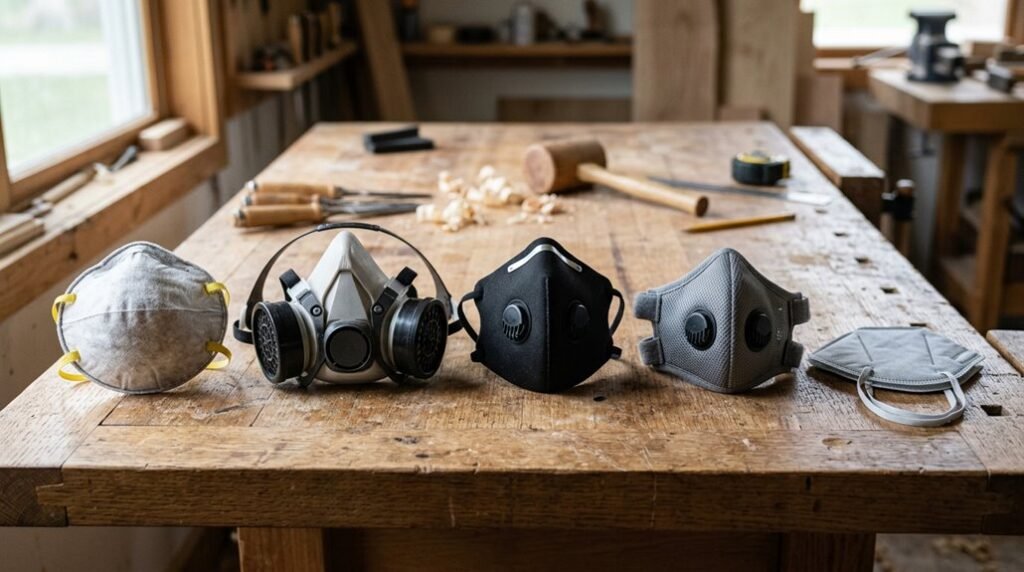
What’s the right mask for your woodworking project? I’ll help you choose from three main respirator types that protect against dust and particles.
Disposable N95 masks filter 95% of particles down to 0.3 microns. Think of them as your quick-job option for light work and plane trips. They’re convenient but less durable.
Half-face respirators like the GVS Elipse P100 offer stronger protection (99.97% filtration) and reusability, making them ideal for longer DIY tasks where you’ll wear the mask for hours.
Full-face respirators add eye protection, which is important when heavy dust and finishing work kick up debris around your face.
Your choice depends on how intense the project is, whether you need eye coverage, and how long you’ll wear it.
3M 8210 N95: Light Sanding and Dust in Your Shop
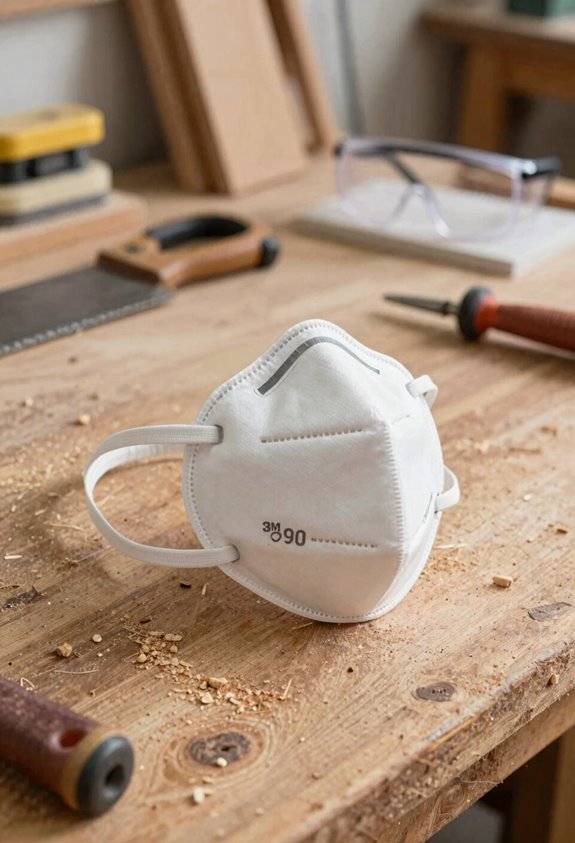
If you’re tackling light sanding jobs and don’t need eye protection, the 3M 8210 N95 is your most affordable starting point. This NIOSH-approved respirator filters at least 95% of sanding dust and airborne particulates down to 0.3 microns, which is very small, when you wear it correctly.
The premolded bowl shape gives you breathing room around your nose and mouth, while the non-irritating edges won’t leave marks on your face. You’ll find packs at Home Depot for roughly $7 or on Amazon for about $18 per 20-pack, making it budget-friendly for hobbyists.
Here’s the catch: during heavy work, it can feel muggy and may fog your eyewear. Stick with this respiratory protection for light sanding, plane trips, and public transit rather than intensive woodworking sessions.
Moldex M Series: All-Day Comfort for Moderate Woodworking
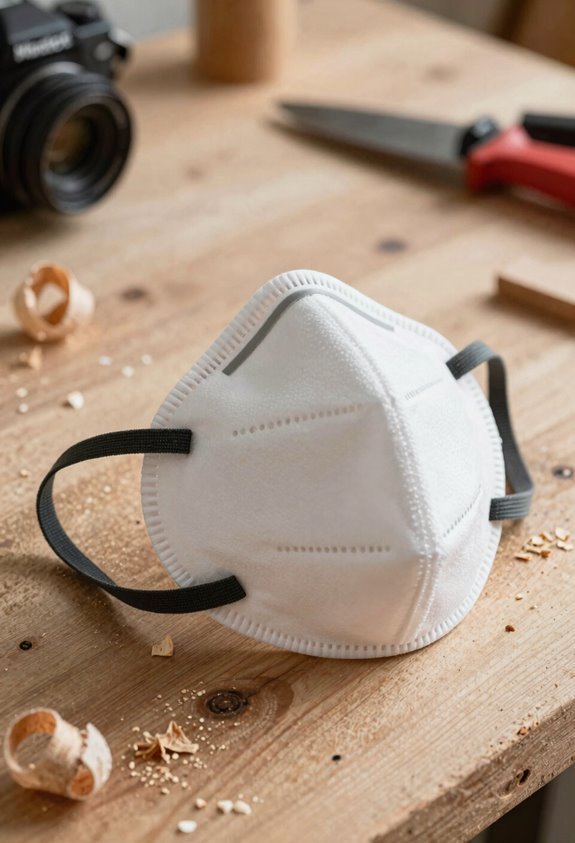
The Moldex M Series Black Particulate Respirator provides better protection when you’re ready to move beyond light sanding into longer, more demanding woodworking projects. This NIOSH N95 mask delivers all-day comfort through its pleated AirWave design, which increases breathing surface area so you’re not fighting for air during marathon work sessions.
What sets it apart is the respirator fit. Two sizes, small (M4621) and medium/large (M4620), mean you’ll actually find one that seals properly on your face. There’s no annoying metal nose bridge or hard edges digging in. The adjustable straps let you customize the fit as you work.
You’ll appreciate how the pleats reduce air resistance, keeping your eyewear fog-free. It’s purpose-built for moderate woodworking tasks where comfort matters as much as protection.
GVS Elipse P100: Heavy Dust, Finishing Fumes, and Long-Term Use
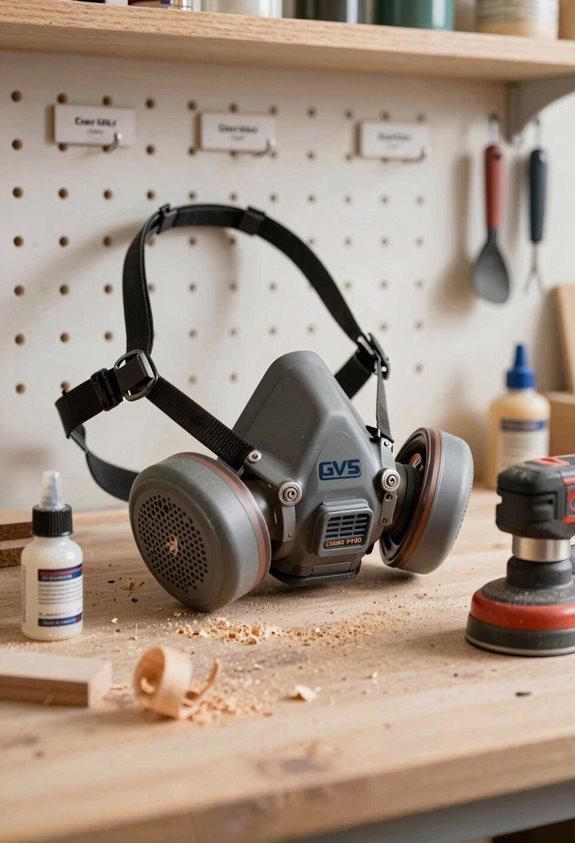
When you’re tackling heavy-duty woodworking projects, think sanding hardwood floors or applying finishing chemicals that kick up serious fumes, you’ll need a respirator that actually steps up to the plate. The GVS Elipse P100 is built for this exact work.
Here’s why it works well for serious woodworkers:
- Superior Protection: P100 filtration blocks 99.97% of particulates and oil droplets, handling both dust and chemical fumes you’ll encounter
- Long-Term Comfort: Its compact design with soft seal and wide head straps won’t leave you exhausted after hours of work
- Practical Setup: Two sizes ensure proper fit, replacement filters cost around $40 initially, and parts stay readily available
The larger filter areas make breathing easier despite P100’s intensity. Wear it under a face shield without interference. You’ll maintain clear visibility while staying protected all day.
Fit Your Respirator Correctly and Choose the Right Filters
Getting the right fit and filter combo might seem like a small detail, but it’s actually what separates real protection from a false sense of security.
I’ll walk you through this. Facial hair compromises your seal, that critical contact between your face and mask. That’s why fit testing matters. You need to verify your respirator actually blocks dust before relying on it.
| Filter Type | Blocks | Best For | Breathing Effort |
|---|---|---|---|
| N95 | 95% of 0.3 micron particles | Light dust | Easy |
| P100 | 99.97% filtration | Heavy fumes | Harder |
| Reusable | Replaceable filters | Long-term use | Varies |
Choose filters matching your task. P100s offer superior protection for finishing fumes but demand more breathing effort.
Reusable respirators like the Elipse give you larger filter areas and adjustable straps. These features are important for maintaining consistent seal integrity throughout your workday.