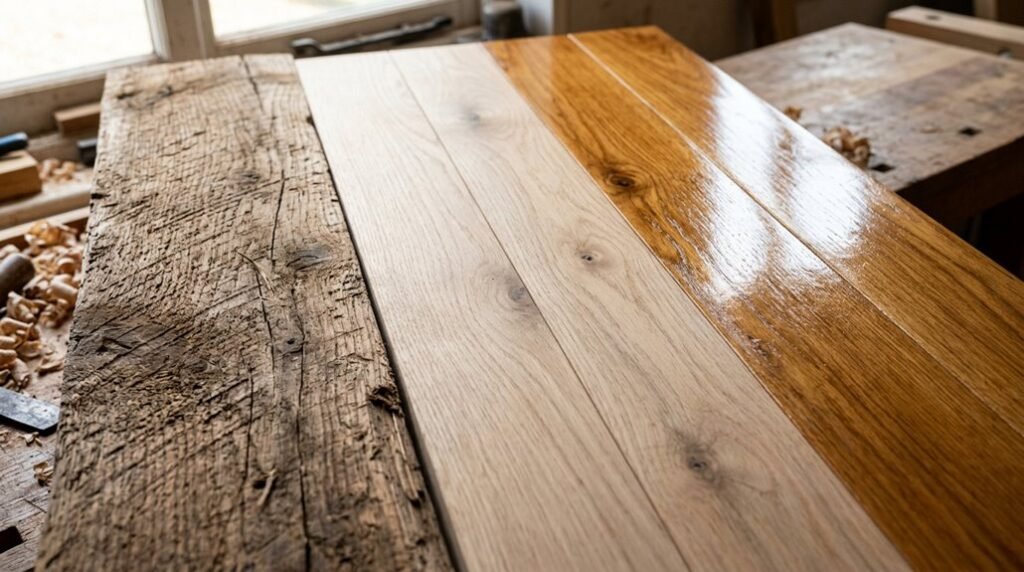
I’m here to walk you through buying quality lumber without the guesswork. Whether you’re building a bookshelf or a deck, choosing the right wood is important for your project. A good selection means the difference between a project that lasts decades and one that warps within months.
You’ve probably wondered what separates solid boards from problem ones, or where pros actually shop. Let’s start with understanding what you’re really looking for, because not all wood is created equal.
Understand Wood Types and Match Them to Your Project
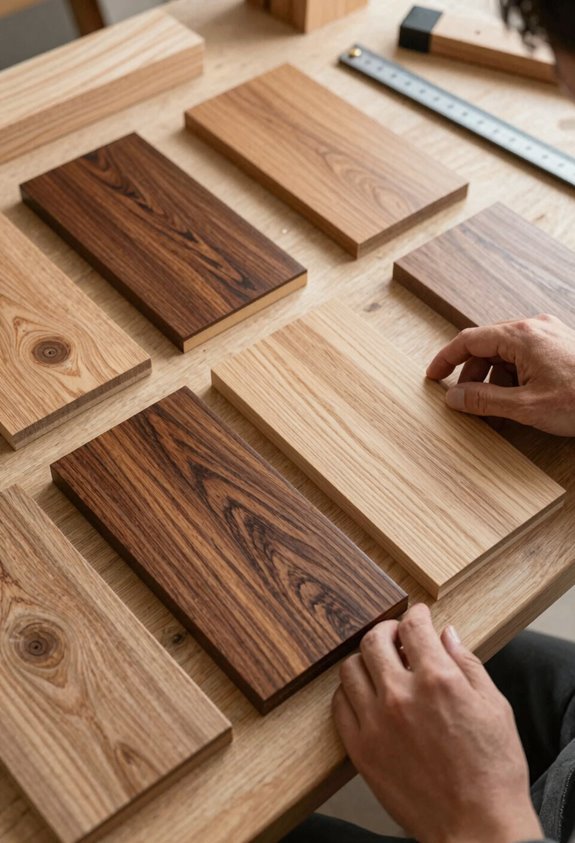
Why does one piece of wood feel completely different from another? It’s all about wood species and where they come from.
Hardwoods come from deciduous trees like oak and walnut; they’re denser and more durable for high-wear surfaces. Softwoods like pine and cedar are easier to work with and cost less. Here’s the thing: you don’t have to choose just one.
The Janka hardness test measures how resistant wood is to denting, helping you pick the right species for your woodworking projects. Need both durability and workability? Mix them. Combine butternut with white pine for balanced results.
Consider stability too. Quartersawn wood resists warping from humidity changes, making it perfect for frames.
Finally, match your wood’s finish compatibility to your project’s look. Grain pattern and color matter. Pick species that’ll absorb finishes the way you want them to.
Where to Buy Wood and What to Look For in-Store
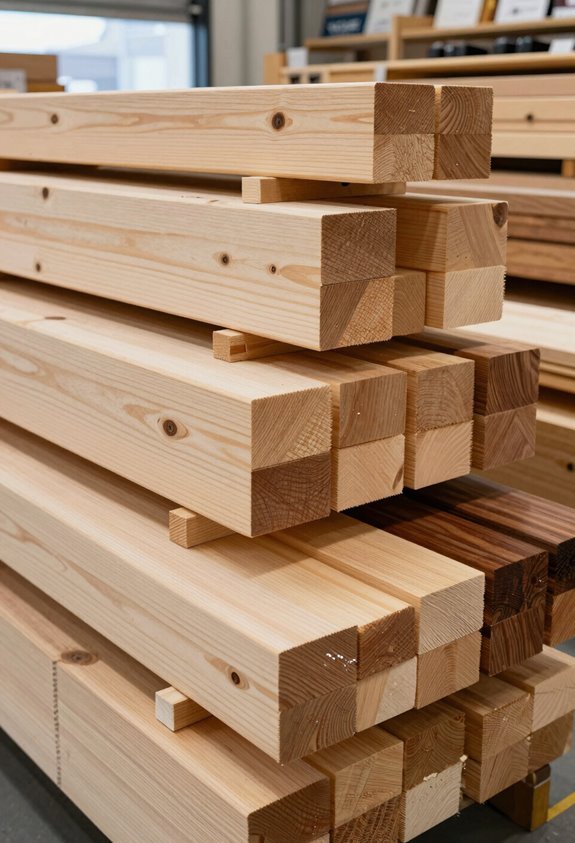
Now that you’ve figured out which wood species work for your project, you’ve got to actually find and buy it, and that’s where your choices matter. I’d recommend visiting a lumberyard first. You’ll find superior board quality, wider hardwoods and softwoods selections, and knowledgeable staff. Big box stores offer convenience and consistent pricing per board, but inventory varies.
In-store inspection is important. Walk the aisles and check each board for warping, knots, cracks, and discoloration. Moisture content matters significantly, especially for hardwoods. I always bring a moisture meter to verify readings at big box locations since their stock varies.
Ask lumberyard staff about moisture levels; they typically know their inventory well. This inspection habit prevents costly project failures and makes sure you’re getting quality wood worth your money.
Transport, Store, and Prepare Lumber Before Assembly
Once you’ve selected your boards at the lumberyard or store, getting them home safely is just as important as picking quality wood in the first place. I’ll walk you through the essentials.
- Transport with the right equipment. Use a lumber cart for long boards and plywood, regular shopping carts won’t cut it. This protects your wood and keeps you safe.
- Store properly to prevent warping. Keep lumber indoors or in a shaded, dry area. Stack boards with evenly spaced stickers (thin strips) between layers for air circulation.
- Verify moisture content. I use a moisture meter to check moisture levels, especially when buying from non-lumberyard sources. This prevents future problems.
- Create a location and inventory system. Document each board’s species, grade, and moisture readings. This reference guide simplifies final cuts planning and assembly later.