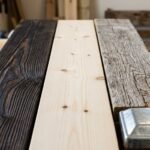

I’ve learned the hard way that wood’s moisture content, basically how much water it holds, makes or breaks your projects. Get it wrong, and you’ll watch your carefully crafted cabinet doors gap, warp, or crack months after you finish.
Here’s what I wish I’d known earlier: wood needs specific dryness levels depending on where it’ll live and what you’re building. Let’s explore what those numbers actually mean.
What Equilibrium Moisture Content Means for Your Woodshop
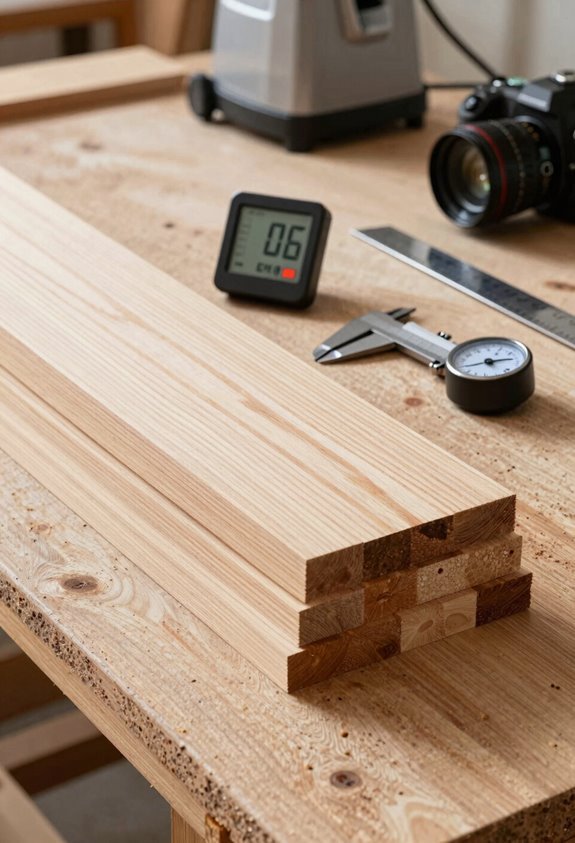
Ever wondered why a cabinet door that fit perfectly last winter suddenly sticks come summer? That’s equilibrium moisture content (EMC) at work. EMC is simply the moisture level wood naturally absorbs or releases based on the humidity and temperature around it. Think of it like a sponge finding its balance in your specific environment.
In most woodshops, interior wood aims for an EMC around 7–9% moisture content when your shop’s relative humidity sits between 40–52%. This percentage matters because wood moves when moisture changes. If your wood’s moisture doesn’t match where you’re actually using it, joints open and veneers buckle.
Understanding EMC helps you target the right dryness level before building, keeping your finished pieces stable and beautiful long-term.
Target Moisture Ranges: Furniture, Cabinetry, and Structural Projects
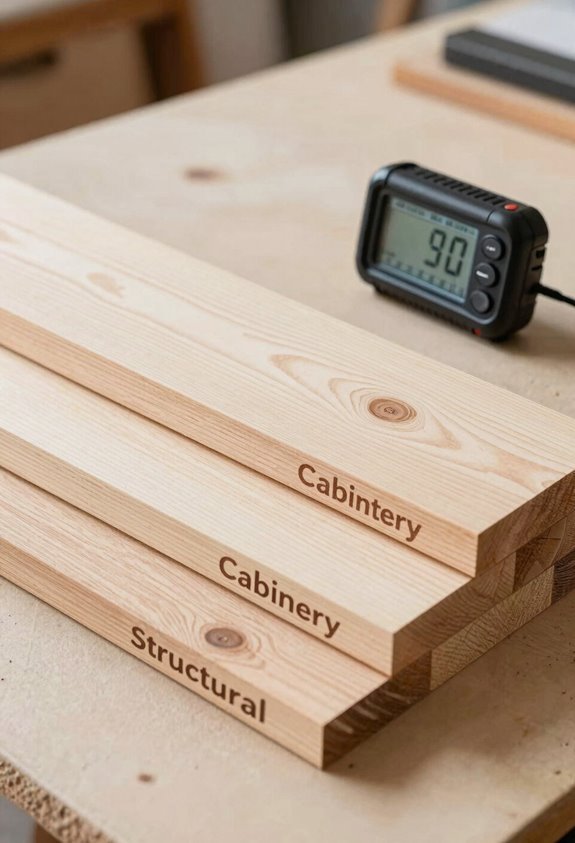
Now that you understand equilibrium moisture content, let’s talk about what specific moisture levels actually work best for different woodworking projects, because furniture, cabinetry, and structural pieces all have different needs. I’ll show you the target ranges for each category and explain why those numbers matter for how your finished project will perform.
Think of these targets as the ideal range where your wood stays stable, looks great, and holds together well over time.
Furniture and Cabinetry Standards
What’s the sweet spot for wood moisture when you’re building something you’ll actually use and live with?
For indoor furniture and cabinets, you’re aiming for 6%–8% moisture content. This range matches what your home’s air naturally contains, around 40%–52% humidity, so your wood won’t shrink or swell after you finish it.
Wood moves. Too wet, and joints loosen. Too dry, and pieces crack. By hitting that 8%–9% target during acclimation, you’re setting yourself up for stable, long-lasting pieces.
Before painting or staining, drop it to 12% or lower for better finish adhesion. Think of it as giving your wood a stable foundation, just like you’d prepare soil before planting a garden.
Structural Project Requirements
When you’re building furniture or cabinets that’ll sit in your home for years, how do you know if your wood’s truly ready?
For structural projects like cabinetry and furniture, you’ll want to target a moisture content (MC) between 12% and 18%. This range depends on where your finished piece’ll live and how much humidity it’ll experience.
Here’s what matters:
Interior pieces aim for 6%–8% MC, since heated homes stay relatively dry. Exterior components tolerate 9%–14% MC because they’re exposed to moisture swings.
Kiln-dried wood typically reaches around 8% MC, though some species land higher, up to 15%, before acclimation.
I’d recommend grabbing a quality moisture meter to verify your wood’s ready. Check it, compare against your project’s environment, and you’ll avoid warping and joint problems down the road.
How to Measure Moisture Content: Pin vs. Pinless Meters
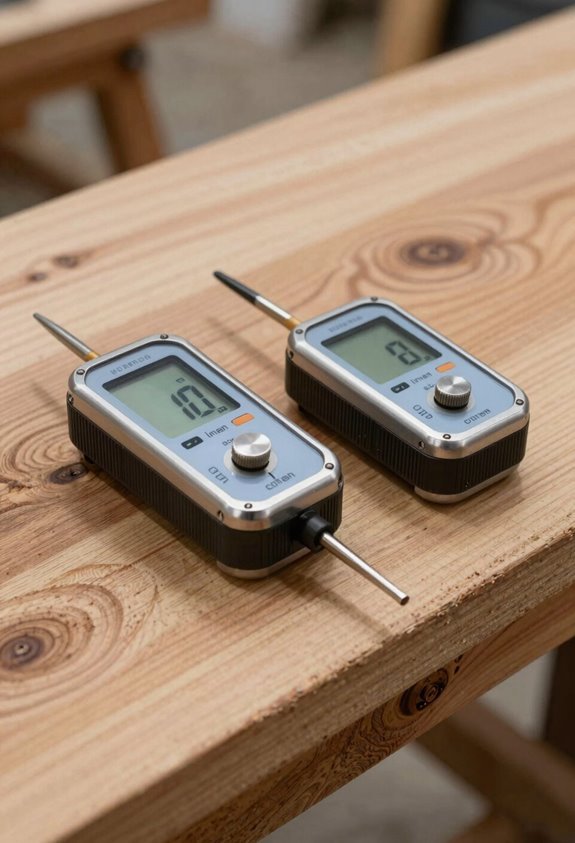
You have two main options when you want to check if your wood is dry enough: pin-type meters and pinless meters, each with their own strengths. Pin-type meters work by pushing small pins into the wood to measure electrical resistance, which tells you the moisture content, but they need good contact with the wood and careful calibration for your specific wood species to give you accurate readings.
Pinless meters, on the other hand, scan your wood’s surface with electromagnetic signals without leaving any marks, giving you faster results across larger areas. However, they can struggle with very thick boards or wood that has uneven density.
Pin-Type Meter Characteristics
How do pin-type moisture meters actually work, and why do woodworkers rely on them so often? Pin-type meters measure moisture content by inserting two pins into wood and reading electrical resistance between them. As wood absorbs moisture, resistance drops, making these meters straightforward tools.
I’ve found pin-type meters valuable because they pinpoint specific problem areas. You can detect high-moisture pockets in thick boards before machining, catching potential warping issues early. They’re also portable and affordable compared to alternatives.
However, accuracy depends on several factors: wood species, grain direction, pin depth, and proper spacing matter considerably. Hardwoods and softwoods require different calibrations. Following manufacturer guidelines prevents skewed results from uneven moisture distribution.
For typical interior woodworking projects targeting 6–9% moisture content, pin-type meters provide the localized verification you need before assembly begins.
Pinless Meter Advantages
Why skip the pins entirely? I find pinless meters valuable for rapid moisture measurement across large wood surfaces without leaving damage. They’re fast, non-destructive, and let me check multiple boards quickly, perfect when you’re working with assembled pieces.
| Feature | Pin Meters | Pinless Meters |
|---|---|---|
| Speed | Slower | Very fast |
| Surface Damage | Yes, creates holes | None |
| Bulk Reading | Limited | Excellent |
| Species Calibration | Basic | Essential |
| Accuracy | High (verified) | Variable |
The real advantage is that I can scan deeper wood layers without puncturing, getting average readings across grain. However, wood species, density, and moisture gradients affect results, so I use manufacturer settings and take multiple readings for reliability.
I combine pinless meters with pin-type ones; each method catches what the other misses, especially on finished or end-grain areas.
When Wood Is Too Wet: Moisture Readings That Spell Trouble
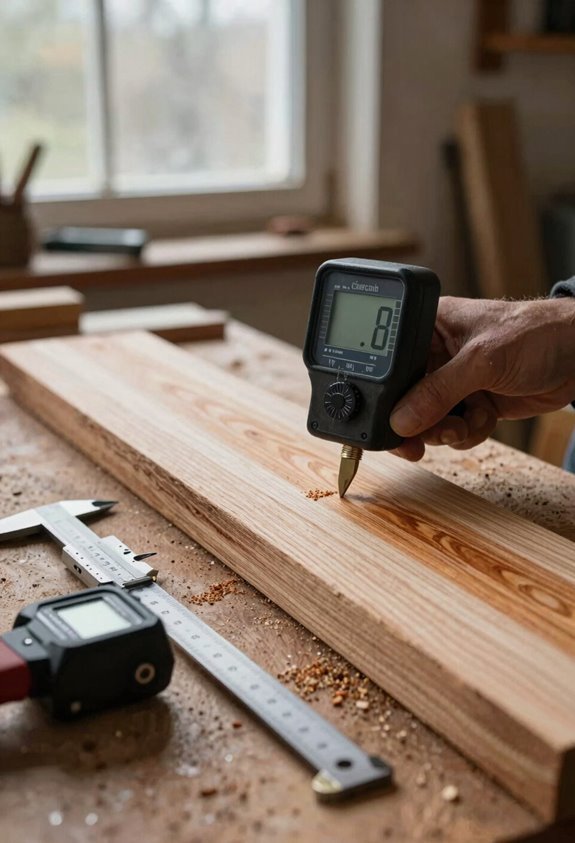
While wood inherently absorbs moisture from its surroundings, there’s definitely a point where it becomes too wet for solid woodworking projects. I’ve found that wood moisture content readings above 15–18% signal trouble ahead. At these levels, your wood resists precise joinery and stable construction.
Here’s what you need to watch for:
Problem readings:
- Above 15–18% MC: Wood’s too wet for accurate joinery
- Above 12–14% MC in basements: High movement risk
- Mismatched MC between wood and environment: Creates gapping and cupping
You’ll want to address elevated readings before finishing. I recommend targeting 6–8% MC for interior pieces. This range minimizes shrinkage and warping later.
A quality meter confirms whether your wood’s ready for your project.
The Fiber Saturation Point: When Wood Stops Shrinking
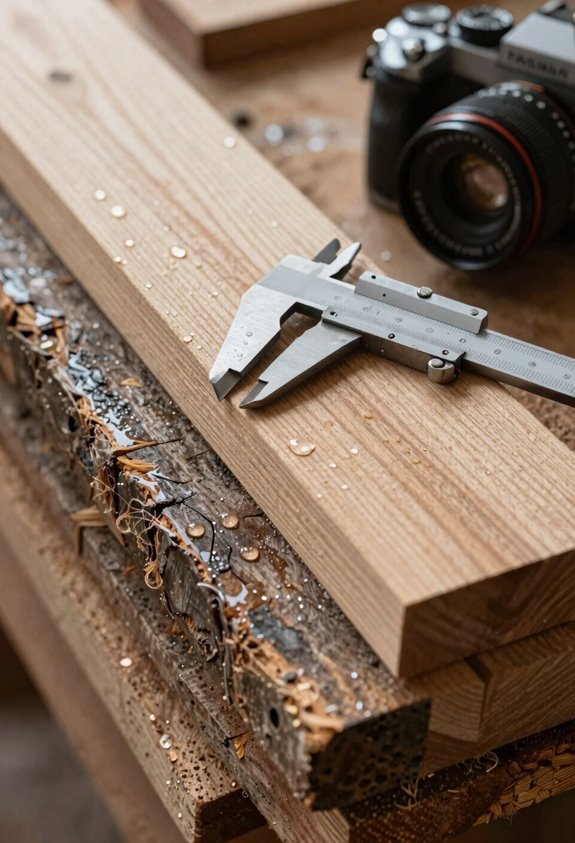
There’s a hard limit in wood where moisture stops causing problems, and it’s called the fiber saturation point (FSP). This threshold sits around 30% moisture content for most woods you’ll work with.
Here’s what matters: below the FSP, wood shrinks and swells as moisture changes. Above it, extra moisture just fills the cell lumens, the hollow spaces inside wood cells, without affecting size. Think of it like a sponge that stops expanding once it’s completely full.
For quality woodworking, you’ll want wood well below the FSP, typically 12% or lower. This dryness stabilizes your joints, prevents warping in veneers, and gives you predictable machining results. When you hit this sweet spot, your projects stay true.
Climate and Season: How They Shift Your Target Moisture
Your target moisture content isn’t the same everywhere. Where you live and what time of year you’re building dramatically changes what “dry enough” actually means. If you’re working in Seattle, you’ll aim for wood around 12.2%–16.5% MC because the air there naturally stays humid, while someone in Las Vegas might target just 4.0%–8.5% MC due to that desert dryness.
The key is matching your wood’s moisture content to your specific location’s humidity swings, so your finished project won’t warp, gap, or crack once it’s installed.
Regional Humidity and EMC
Because wood inherently absorbs and releases moisture depending on its surroundings, the climate where you’ll use your finished project becomes your real target. Different regions have vastly different humidity levels, which directly affects EMC, the equilibrium moisture content where wood stops exchanging moisture with the air.
Consider these regional examples:
- Seattle: 12.2%–16.5% EMC (humid climate)
- Des Moines: 12.4%–14.9% EMC (moderate humidity)
- Las Vegas: 4.0%–8.5% EMC (dry climate)
Interior woodworking spaces typically hover around 40–52% relative humidity, yielding an EMC near 8–9%. Your target moisture content should match your end-use environment. Aiming within two percentage points of that EMC minimizes post-installation warping and seasonal movement.
This alignment between your wood’s moisture and its eventual home prevents costly surprises.
Seasonal Acclimation Strategies
How does the time of year affect what moisture level you’re actually aiming for?
Your target moisture content shifts with the seasons because humidity changes throughout the year. In winter, dry climates pull moisture from wood aggressively, while summer humidity works the opposite direction. This means you’ll want different final MC depending on when you’re building.
Use wood moisture meters to track changes over several months. Thinner pieces acclimate faster, about five months to stabilize, while thicker stock takes longer and responds more dramatically to seasonal swings.
Here’s the practical approach:
Winter projects: Target 6–7% MC in dry regions
Summer builds: Aim for 7–8% in humid areas
Year-round shops: Maintain 8–9% for consistency
Let your wood acclimate to its final environment before cutting or assembly. This prevents warping and movement later.
How Wood Species and Thickness Affect Moisture Content
Why does a thin pine board dry faster than a thick walnut plank? Moisture travels from the wood’s center outward, so thinner boards reach your target 6%–8% moisture content quicker than thicker pieces. Walnut, being denser than pine, naturally absorbs and releases moisture slower.
What you need to know:
- Thin boards (under 1 inch) dry in weeks
- Thick lumber (3+ inches) may take months
- Dense species like oak and walnut resist moisture changes more than softwoods
This matters for your projects. Thicker walnut pieces might still feel wetter than pine boards sitting beside them.
I’d verify each board’s actual moisture content with a meter before construction, making sure everything aligns to your shop’s humidity conditions.
Kiln-Dried vs. Air-Dried: Which Is Right for You?
When you’re choosing between kiln-dried and air-dried wood, you’re really deciding between speed and precision. Kiln-dried wood gets to around 8% moisture content (MC) in weeks, while air-dried lumber takes months or years to reach 18%–22% MC.
The key difference is that kiln-dried wood can be ready for your project faster, but both types need time to adjust to your workshop’s humidity level (what we call equilibrium with your end-use environment) to prevent warping and joint stress after you’ve built your piece. If you’re working on interior furniture that demands 6%–8% MC, kiln-dried is your faster route, but if you’re making cabinetry that can tolerate 12%–18% MC, air-dried wood might save you money while still delivering solid results.
Speed And Moisture Reduction
Got wood that’s still too wet for your project? Here’s where drying methods make a real difference in your timeline.
Kiln-drying dramatically speeds up moisture reduction. I’m talking weeks instead of months. These controlled environments use heat and humidity management to pull moisture levels from 20% down to around 8% quickly and predictably.
Air-drying takes patience, sometimes years depending on wood thickness and weather. Your lumber gradually reaches 18%–22% moisture levels, though indoor heating can drop this further before you start building.
For interior projects targeting 6%–9% moisture levels, kiln-dried wood gets you working faster. Construction work tolerating 9%–14% moisture levels? Air-dried works fine if you’ve got time. Choose based on your deadline and end-use environment, not just convenience.
Equilibrium With End-Use Environment
Once you’ve dried your wood to a target moisture content, the real work isn’t over; it’s just shifting. Your wood will keep responding to humidity around it, which is why equilibrium moisture content matters. This is the moisture level wood naturally reaches when sitting in its actual environment: your workshop, home, or job site.
Here’s what you need to know: interior spaces typically stabilize around 7–9% MC, while exterior conditions push higher, often 9–14%. Before you machine or install anything, let your wood acclimate to that space. This prevents warping and splitting later.
Think of it like this: a wood board dried to 8% in the kiln won’t stay there forever. It’ll adjust to match its surroundings. Plan ahead and you’ll build better projects.
What MC to Expect From Kiln-Dried and Air-Dried Lumber
How much moisture is actually in the wood you’re buying? When you pick up kiln-dried lumber, it typically finishes around 8% moisture content, though thicker pieces or certain species might sit around 15%. Air-dried lumber tells a different story; you’ll find it hovering between 18% and 22% moisture content at purchase.
If you bring air-dried wood indoors into a heated space, the moisture content drops several percentage points before you even start working. That’s your wood beginning to acclimate. For interior projects, you’re aiming toward 8–9% moisture content, which matches what your finished piece will eventually need in your home’s actual environment.
Why You Must Acclimate Wood Before Building
Why should you let wood sit in your workshop before building? Because wood moves. It shrinks and swells as it absorbs or loses moisture from the air around it. That’s where acclimation comes in; it’s the process of letting your lumber adjust to your workshop’s moisture levels before you cut or assemble anything.
Here’s why this matters: if you skip acclimation, your finished project will shift after installation, causing warping, gaps, and joint separation. Your wood wants to match its environment. In most homes, interior humidity sits around 40–52%, which means your wood should reach about 8–9% moisture content.
Check your boards regularly with a moisture meter. You’re aiming for wood within two percentage points of that target. This simple step prevents expensive mistakes.
How to Dry Wood Without Cracks or Hard Outer Shells
If you’ve ever seen wood with deep cracks radiating from the center or a rock-hard outer shell that won’t accept stain evenly, you’ve witnessed what happens when drying goes wrong. I’ll show you how to avoid this.
The key is controlling drying speed. When wood dries too fast, the outer surface hardens before interior moisture escapes, trapping stress inside. This creates those ugly cracks and checks.
Here’s what works:
Slow, steady drying – Allow weeks, not days. Patient drying prevents damage.
Monitor moisture content – Use a quality meter to track progress toward 6%–9% for woodworking projects.
Maintain airflow – Stack wood with spacers between boards so air circulates evenly.
Avoid direct heat – Let wood acclimate naturally to your workshop’s humidity rather than forcing it dry artificially.
Five Moisture-Related Mistakes That Ruin Projects
Even experienced woodworkers stumble when they underestimate moisture’s power to warp, shrink, and split their work. I’ve learned that avoiding common moisture content mistakes separates successful projects from disappointing ones.
Here are the pitfalls I avoid:
- Skipping acclimation. I don’t rely on kiln-dried wood alone; I acclimate it to my workshop’s humidity first.
- Ignoring moisture meters. Quick pin or pinless readings catch problems before I cut.
- Mismatching MC targets. Interior furnishings need 7%–12% MC, while flooring demands 6%–9%.
- Neglecting end-use environment. I always check the final location’s relative humidity.
Interior spaces around 40–52% RH need wood at roughly 8–9% moisture content. When I respect these details, my joints fit perfectly and my pieces stay stable for years.
Pre-Shrink Wood to Prevent Later Warping
How can you stop wood from warping months after you’ve finished your project? The key is pre-shrinking, getting your wood’s moisture content down before you start building.
When you acclimate wood to your home’s humidity level beforehand, you’re letting it settle in advance. I recommend drying stock to 8–9% moisture content for interior projects. You’ll want to verify this using a moisture meter, your best tool here.
Here’s why it matters: wood that’s still too wet will continue shrinking after you’ve assembled it, causing joints to gap and surfaces to twist. By pre-shrinking your boards now, you’re locking in stability later. Think of it as letting your material adjust on your schedule, not your finished piece’s.
Final Moisture Checks Before You Build
Once you’ve let your wood settle to around 8–9% moisture content, you’re not quite done yet. You need to verify those numbers before cutting your first board. I can’t stress enough how moisture measurements matter. Here’s what I do:
- Use a quality moisture meter (pin-type or pinless) to test multiple spots
- Check for outliers that signal problem boards to set aside
- Test different boards in your stack, not just the top ones
- Record your readings to spot patterns across your lumber
A moisture meter’s your best friend here. It eliminates guesswork and catches boards that’ll warp later. I’ve learned that skipping this step costs more time than it saves. Verify everything before you build; it’s the difference between projects that stay flat and those that don’t.