I get it—you’re drawn to woodworking but overwhelmed by the endless tool catalogs and YouTube channels claiming you need everything. Here’s the truth: you don’t.
I’ve watched beginners waste hundreds on gadgets they’ll never use while missing the core skills that actually matter. The good news? You can start with just a few basics and build something real within weeks. Let me show you exactly where to begin.
What Woodworking Actually Is
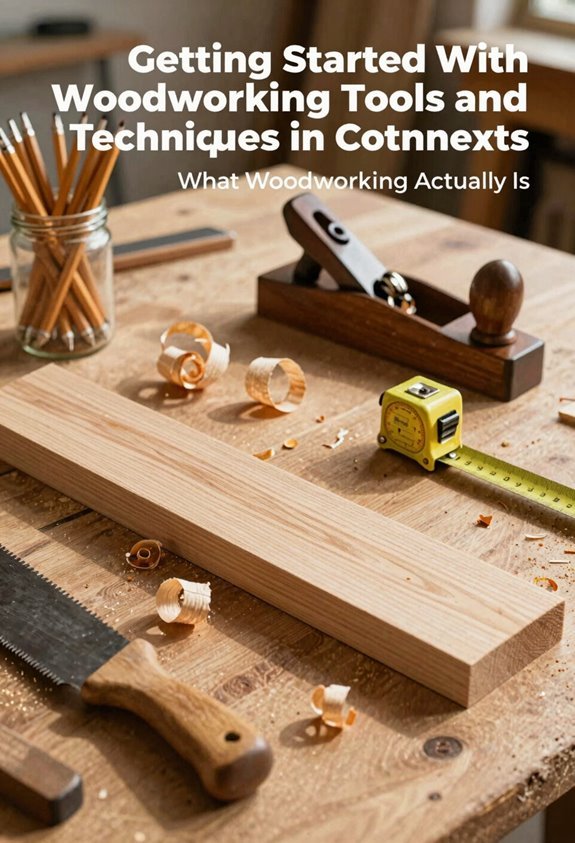
Woodworking, the craft of transforming raw wood into objects both beautiful and functional, is easier to start than you might think. You’re joining pieces of wood together using joinery techniques, then shaping and finishing them into something useful or decorative.
The basics involve several key steps. First, you’ll use hand tools or power tools to cut and shape your wood. Then comes joinery, connecting pieces securely. Next, you’ll sand surfaces smooth, preparing them for the final stage: finishing with stain or sealant.
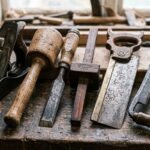
You don’t need expensive equipment initially. Many woodworkers start with basic hand tools like chisels and saws, gradually adding power tools as they build skills. Each project teaches you something new, whether you’re crafting a simple cutting board or tackling furniture. That’s what makes woodworking so rewarding: you’re constantly growing.
Safety Gear Every Woodworker Needs
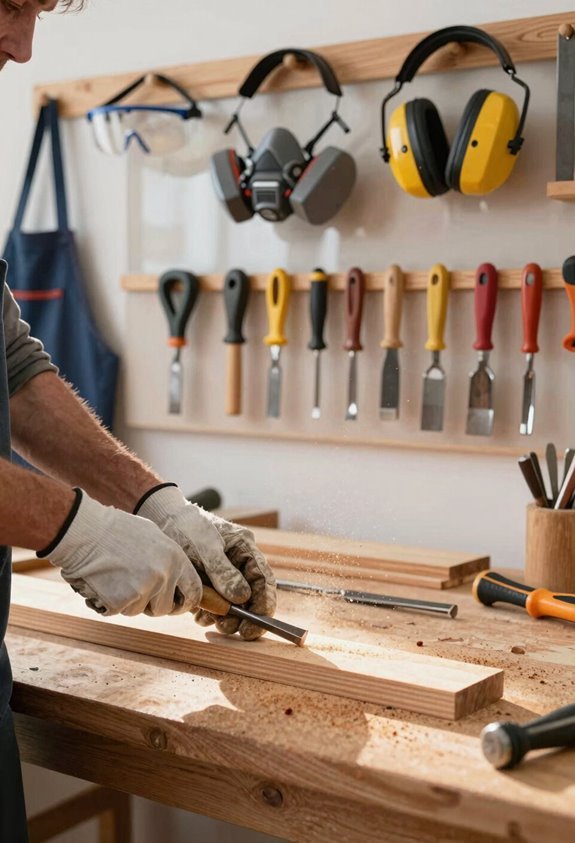
Before you pick up any tool, I want you to protect the parts of your body that matter most: your eyes, ears, and lungs. You’ll need safety glasses or a face shield to guard against flying wood chips and dust, plus hearing protection like earplugs or earmuffs when you’re running loud power tools (anything over 85 decibels can damage your hearing).
A dust mask or respirator keeps you from breathing in fine wood particles that can irritate your lungs over time, especially when you’re sanding or using machinery that kicks up sawdust.
Eye And Face Protection
Your eyes and face are vulnerable when you’re working with woodworking tools, and protecting them should be your first priority before you even pick up a saw or sander.
I recommend investing in quality eye protection and safety glasses that meet appropriate protection standards. These aren’t just optional; they’re necessary PPE that guards against flying debris and dust.
| Protection Type | Best For | Key Features |
|---|---|---|
| Safety Glasses | General woodworking | Lightweight, affordable |
| Goggles | Dust-heavy tasks | Sealed edges |
| Face Shields | Cutting/grinding | Full-face coverage |
For higher-risk tasks like cutting or grinding, I add face shields to my safety glasses for maximum protection.
Always inspect your protective equipment before each session for cracks or damage. Storing your gear properly keeps it ready when you need it most.
Respiratory And Hearing Protection
Dust and noise, two invisible hazards, can damage your lungs and hearing faster than you’d realize. When you’re sanding, cutting, or routing, you’re creating respirable particulates that float in the air. These tiny particles enter your lungs if you’re unprotected.
Respiratory Protection keeps you safe. A good respirator or dust mask filters harmful particles before you breathe them in. Choose masks rated for woodworking dust.
Hearing Protection Equipment shields your ears from power tools’ damaging noise. Earplugs or earmuffs reduce sound exposure during extended work sessions.
Both pieces of gear are non-negotiable. Store your respirators and hearing protection equipment clean and dry so they stay effective. You’re building skills and protecting yourself, that’s the woodworking way.
The Essential Hand Tools Every Beginner Needs
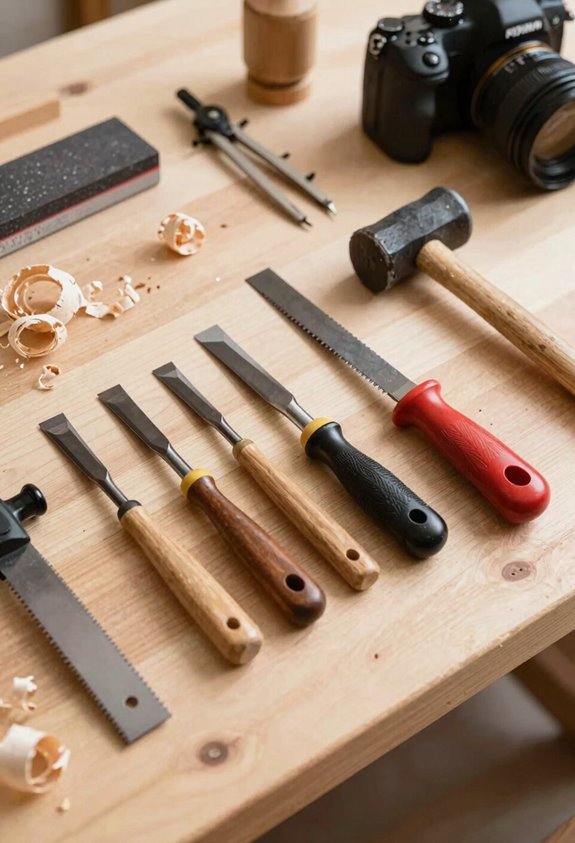
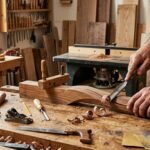
A solid foundation in woodworking starts with mastering a small set of reliable hand tools before you ever plug in a power drill. I’d recommend starting with these core tools: a hammer, screwdrivers (both flathead and Phillips), nails, chisels, a hacksaw, and a try square.
These tools handle the fundamental techniques you’ll use constantly: marking your cut lines, measuring distances accurately, sawing straight cuts, chiseling joints, and joining pieces together. Add clamps and a sturdy worktable to complete your setup.
This practical kit lets you build simple projects, like a basic workbench or furniture pieces, while developing real skills. You’ll discover what works for your hands and style before investing in expensive machinery. Master these basics first, then expand thoughtfully.
Marking and Measuring: Getting Accuracy Right From the Start
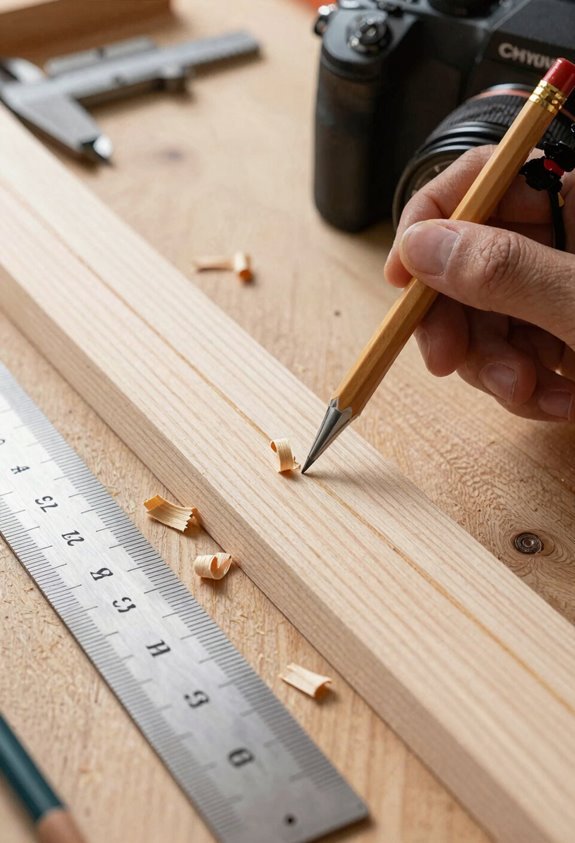
I’ll show you how picking the right marking tools and using them the same way every time helps your woodworking projects succeed. When you grab a marking gauge with a wheel (or a pin gauge if that’s what you’ve got), a sharp pencil or knife, and a reliable tape measure, you’re setting yourself up for cuts that actually fit together the way they’re supposed to.
Think of it like this: if you measure a board at 15 5/8 inches one way and 15 9/16 inches another way, those tiny differences matter. I’ll teach you how to read measurements precisely and mark them consistently so your pieces come out right.
Precision Tool Selection
Getting your measurements right from the start makes everything that comes after easier, and that’s where marking and measuring tools become your best friends.
I recommend investing in quality marking tools like a marking knife and pencil. They’re precise and reliable for layout accuracy on your boards. A sturdy tape measure is essential too, since you’ll constantly read measurements involving fractions like 15 5/8″ or 15 9/16″.
Pair these with a square or bevel gauge for consistent marking. Test straightness by checking your lumber from multiple angles before you begin. Understanding lumber species matters here; softwoods like pine are forgiving for beginners.
When you use the same tools consistently, your accuracy improves dramatically. You’ll develop confidence and join the community of woodworkers who understand that precision starts before the saw touches wood.
Consistent Layout Practices
Once you’ve picked out your tools and materials, the real precision work begins, and it all comes down to how you mark and measure your wood. I’ll show you why getting this right matters.
Consistent layout practices separate solid projects from frustrating mistakes. Here’s what you’ll need:
- Marking tools: Use a marking knife or pencil for accuracy
- Measuring devices: Tape measure and marking gauge (wheel type preferred)
- Checking tools: Square or bevel gauge for angles
- Lumber selection: Choose straight boards by checking warping from multiple angles
- Fraction reading: Master reading measurements like 15 5/16 inches precisely
When I measure lumber dimensions and species, I read fractions thoroughly. I also inspect each board by holding it up and comparing both ends on the ground.
These foundational habits will improve your measuring into reliable layout work that builds confidence as you progress.
Start With These 5 Power Tools (And Skip the Rest)
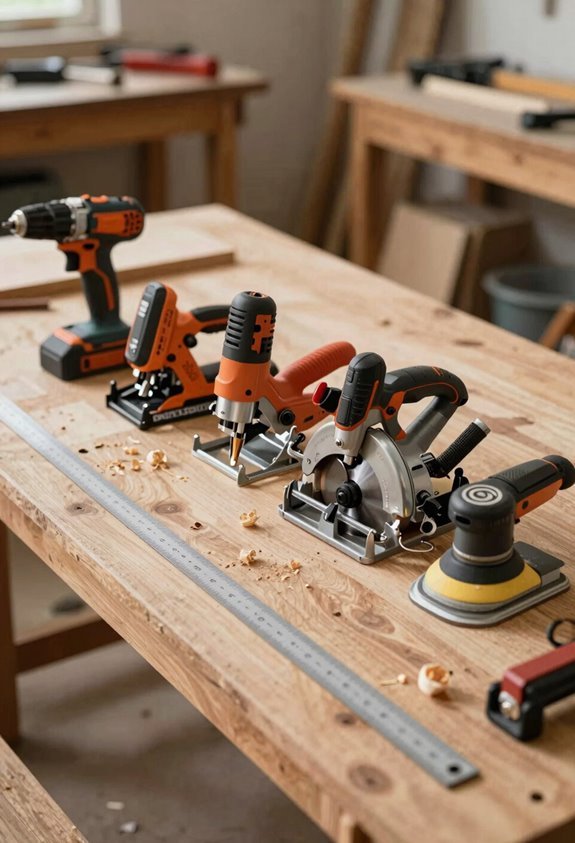
When you’re just beginning your woodworking journey, it’s tempting to buy every tool you see at the hardware store, but that’s a fast way to waste money and clutter your workspace. Here’s what you actually need:
Start with corded power tools for reliability. A drill handles boring holes and driving screws. A circular saw cuts wide boards affordably; it’s much more versatile than expensive alternatives. A jigsaw creates curved cuts that other tools can’t match. A random orbital sander smooths rough edges and surfaces quickly.
Skip the table saw and multi-function combo machines. They’re overkill now and waste your money. Use a track saw only for sheet goods later.
These five power tools let you build fundamental skills without overwhelming your budget or workspace. You’ll join the growing community of makers who started simple and built from there.
Build Your Workshop on Any Budget
You don’t need thousands of dollars to start woodworking. I’ve built quality pieces with just sawhorses, plywood, and a handful of essential tools that cost less than a used laptop.
The trick is starting small with inexpensive hand tools and basic power tools, like a drill or circular saw, then adding one or two bigger investments only after you’ve confirmed you actually need them. As your skills grow and your projects get more ambitious, your workshop grows with you, so you’re never stuck with expensive equipment gathering dust.
Essential Tools On Budget
Building a functional workshop doesn’t require dropping hundreds of dollars on fancy equipment right out of the gate. You’ll want to start with these budget-friendly essentials that’ll cover most beginner projects:
- Hammer and screwdrivers (multiple sizes)
- Chisels for detail work and joints
- Try square for accurate measurements
- Clamps to hold pieces while you work
- Circular saw for straight cuts through sheet stock
Add a jigsaw and drill to your starter toolkit next. These power tools give you serious capability without breaking the bank. Stick with corded models; they won’t lose charge mid-project. Skip combo machines, since single-purpose tools stay simpler and cheaper.
A basic worktable rounds out your essential setup. You’re not investing in everything now. You’re building gradually, testing what interests you, then upgrading only when projects demand more.
Scaling Your Workshop Investment
Once you’ve mastered the basics with that starter toolkit, your next move depends entirely on what projects grab your interest. Rather than splurging on expensive equipment immediately, I recommend scaling gradually. After building your workbench and completing a few starter projects, you’ll know which tools deserve investment.
Focus on upgrading corded tools first; they’re reliable and cost-effective for regular use. Expand your basic set of hand tools strategically by adding specialty clamps, chisels, or sanders only when specific projects demand them.
This staged approach prevents wasted money on equipment you’ll rarely touch. You’re joining countless woodworkers who’ve discovered that smart scaling builds both skill and workshop confidence at the same time.
Woodworking Fundamentals: What to Practice Before Power Tools
The foundation of good woodworking starts not with a table saw or drill press, but with hand tools and the skills they teach. You’ll develop precision and control that power tools can’t give you.
Here’s what to master first:
- Measuring accurately using fractions and reading lumber dimensions
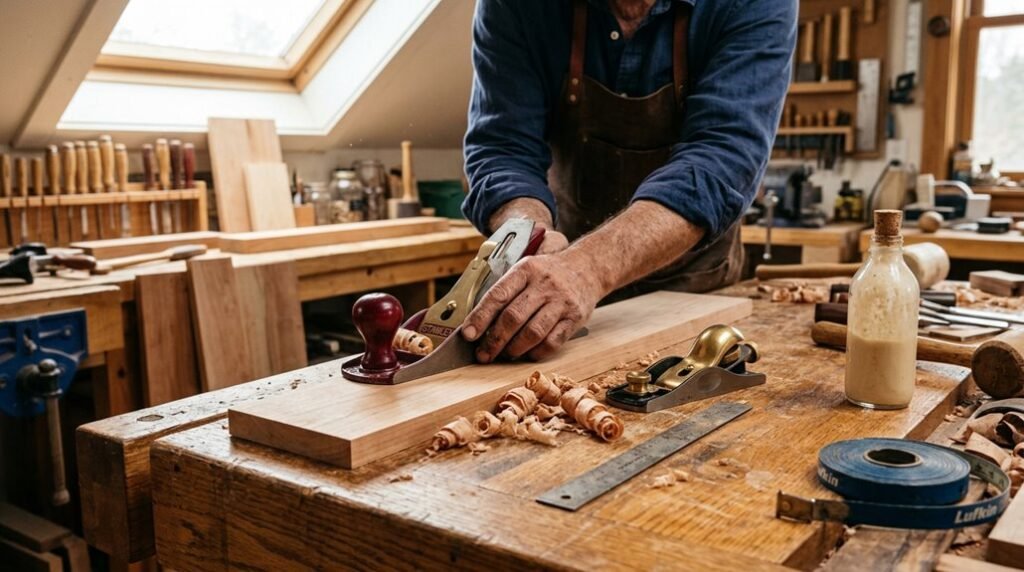
- Hand tool skills like sawing, chiseling, and planing with intention
- Sharpening your tools so they work efficiently
- Basic joinery techniques that join pieces together
- Safety practices at your workbench, including proper lighting and dust control
Start with simple projects using essential tools: squares, mallets, hand saws, and a basic drill. You’ll build real confidence and understand wood’s behavior before tackling machinery. This patient approach helps beginners become capable woodworkers.
Your First Project: Choosing Something Achievable
Your first woodworking project should be simple enough that you’ll finish it without frustration, yet meaningful enough that you’ll actually learn something. I recommend starting with a basic shelving unit or small workbench using plywood and softwood boards like pine.
These beginner projects teach you essential skills: accurate measurement with a tape measure, proper clamping, and fundamental safety practices. You’ll use your basic tools (hammer, chisel, drill, and circular saw) without feeling overwhelmed.
Keep your project under 3 feet tall and 2 feet wide initially. This manageable size builds confidence while letting you practice accurate reading of measurements, selecting straight lumber, wearing appropriate safety gear, and cutting and assembling boards.
You’ll create something functional, gain real experience, and develop the foundation for more complex projects ahead.
5 Beginner Mistakes That Waste Time and Money
Why do so many woodworkers blow their budget before they’ve finished their first project? I’ve seen it happen countless times. You’ll save money and time by avoiding these beginner mistakes:
- Buying a full workshop upfront instead of starting with essential tools
- Choosing battery-powered tools that self-discharge over reliable corded options
- Replacing a table saw with a track saw for furniture projects
- Investing in multi-function combo machines that waste time switching functions
- Skipping simple projects before tackling complex stationary equipment
The smartest approach? Start small and build steadily. I recommend purchasing basic, solid tools first, then upgrading gradually as your skills grow.
This steady progression in beginner woodworking prevents wasted money and teaches you proper measurement, joinery, and safety fundamentals. Cost savings come naturally when you’re intentional about each purchase.
What to Buy Next: When Stationary Tools Make Sense
Once you’ve mastered the fundamentals with hand tools and simple projects, stationary tools become your next logical investment. These machines form the backbone of any serious workshop, delivering precision and efficiency that hand tools can’t match.
Start with essentials: a table saw handles most cutting tasks, while a drill press ensures perfectly vertical holes. As your skill progression continues, add a bandsaw for curves and a belt sander for smoothing.
Before buying anything, consider your planned projects and workspace. Prioritize safety features and dust collection systems; they’re non-negotiable. Quality dust collection keeps your shop clean and protects your lungs.
Don’t rush upgrades. Each tool should align with your growing abilities and project needs. This measured approach prevents wasting money on equipment you’ll outgrow quickly.