I’m going to show you why wood remains the go-to material for most builders, even though it comes with real tradeoffs. You’ve probably walked into a wooden house and felt something concrete can’t quite match. That comfort comes with responsibilities.
Before you decide whether wood’s strength, speed, and natural appeal outweigh its maintenance demands, let’s explore what actually happens when you build with it.
Wood Still Dominates Residential Building. Here’s Why
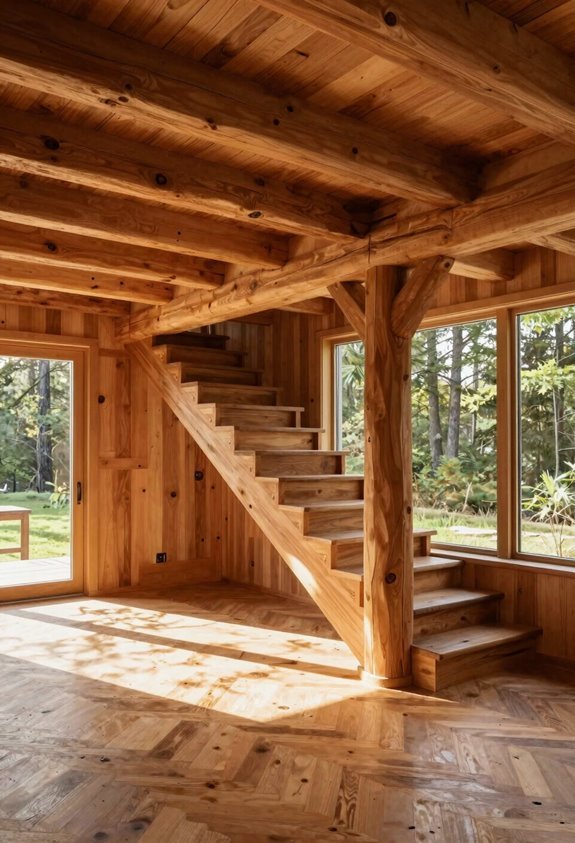
Why does wood still dominate American residential construction after all these years? Over 90 percent of American homes use wood framing, and there’s solid reasoning behind this choice.
Wood delivers real advantages that builders and homeowners value. It’s faster to construct with, as prefabrication and simple on-site assembly mean quicker completion. The material handles easier than alternatives, reducing labor complexity and costs.
Wood’s ease of handling and prefabrication capabilities speed construction while reducing labor costs compared to alternative materials.
Beyond speed, sustainability drives momentum. Wood comes from renewable forests and actually stores carbon, lowering production impacts compared to concrete or steel. Modern codes now support engineered wood products and mass timber in taller buildings, expanding possibilities beyond single-family homes.
Protective treatments and fire-retardant systems have addressed historical fire concerns, making wood construction safer. This combination of practical benefits and environmental appeal explains wood’s lasting dominance in residential construction.
Wood’s Surprising Strength: Why It Beats Steel in One Way
How’s this for a surprising fact: wood can actually outperform steel in one essential way that might shock you?
When we talk about breaking length, the distance a material can span before it breaks under its own weight, wood wins. Here’s why you’ll want to understand this:
- Strength-to-weight ratio: Wood carries loads efficiently without requiring massive supports
- Tensile strength varies: Different species and moisture content affect performance, so choosing the right timber matters
- Spans longer distances: Wood requires fewer support columns than you’d expect
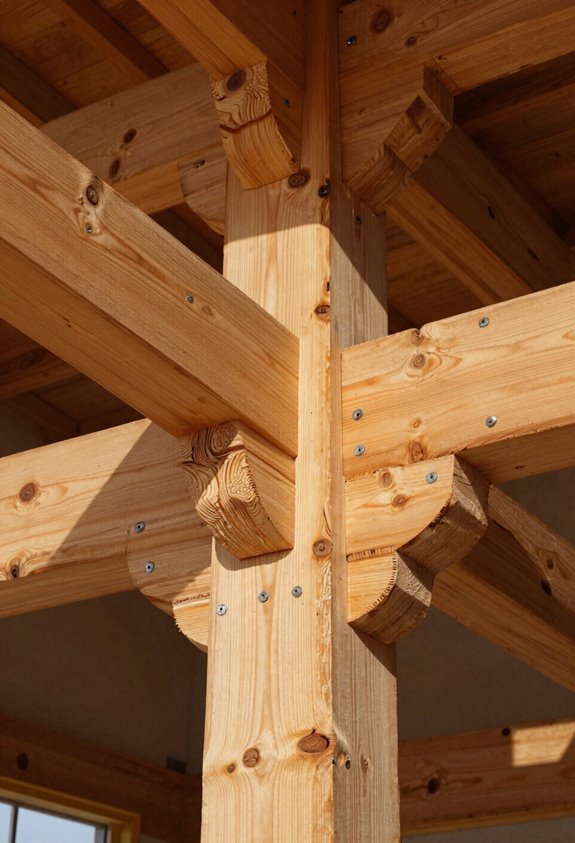
- Structural efficiency: Traditional timber frames prove this concept works in real buildings
Wood’s lightweight nature combined with impressive strength means architects can design bigger open spaces with less material. Modern mass timber technology amplifies these advantages further, making wood a competitive choice against steel in specific applications.
Why Wood Sounds and Feels Better Than Concrete
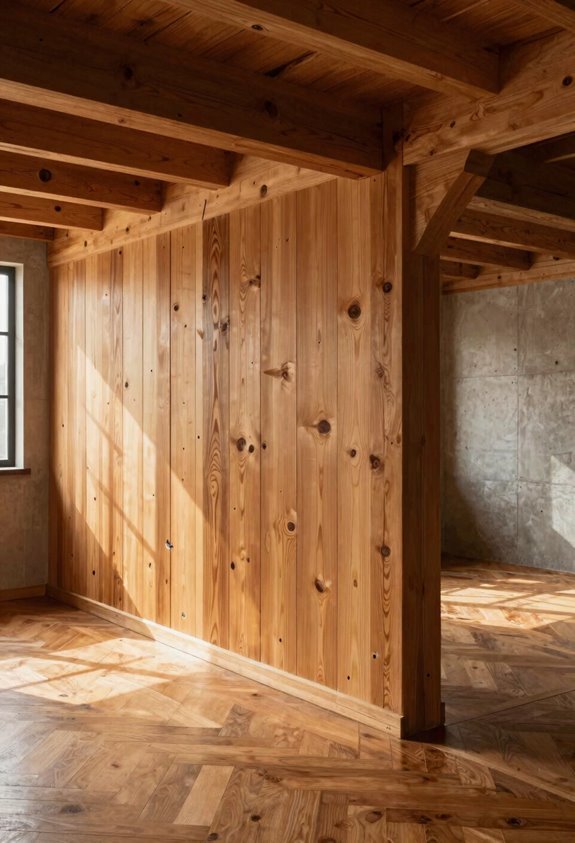
When you step into a wood-filled room, you’ll notice it feels warmer and sounds noticeably quieter than a concrete space, and there’s actual science behind that cozy sensation. Wood absorbs sound waves because of its porous structure, which means it soaks up noise instead of bouncing it back like concrete does, eliminating that harsh echo you’d get in a bare industrial space.
Plus, wood’s specific heat (the amount of energy needed to change its temperature) is nearly twice that of concrete, so it holds onto warmth better and keeps indoor temperatures more stable, making the whole environment feel more comfortable and inviting.
Acoustic Absorption Properties
Ever notice how a wooden gymnasium feels cozier and less echoey than a concrete parking garage?
That’s acoustic absorption at work. Wood’s porous structure naturally traps sound waves instead of bouncing them around like concrete does. Here’s what makes wood work well for interior spaces:
- Sound damping: Wood’s cellular makeup absorbs higher frequencies that create harsh echoes
- Even sound field: You’ll hear balanced acoustics throughout the room, not dead spots or hot spots
- Lower transmission: Sound doesn’t travel through wood as easily as steel or concrete
- Comfort factor: Less noise reflection means a warmer, more intimate listening experience
When you’re designing a space where people gather, whether it’s a concert hall or your bedroom, wood’s acoustic absorption properties create an environment where you actually want to spend time. The sound just feels right.
Thermal Comfort And Warmth
Why does touching a wooden table feel so different from placing your hand on concrete? Wood wins because of its natural insulation properties. I’d explain it this way: wood contains tiny air pockets throughout its cellular structure that trap heat, keeping spaces warmer without cranking up the thermostat.
Here’s what makes wood special:
- Higher heat storage: Wood’s specific heat is nearly twice concrete’s, meaning it absorbs and releases warmth gradually, moderating temperature swings.
- Moisture content advantage: Wood’s moisture-driven stability helps maintain consistent interior temperatures, avoiding that cold, harsh feeling concrete gives you.
- Acoustic warmth: Beyond thermal comfort, wood absorbs sound, creating welcoming spaces rather than the echoing emptiness of hard surfaces.
These qualities combine to make wood simply feel more inviting and comfortable.
Wood Species: Matching 60,000+ Options to Your Design
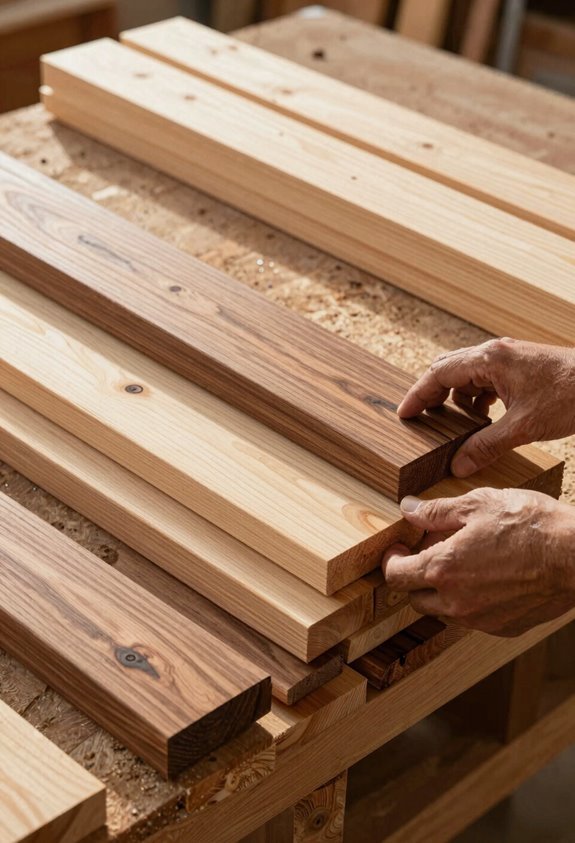
How do you narrow down thousands of wood choices to find the perfect material for your project?
With over 60,000 wood species available worldwide, material selection feels overwhelming. But here’s the thing: you’re not alone in this journey. Smart builders like you match species to specific performance properties and sustainability goals.
Consider these factors:
- Strength needs: Oak handles heavy loads; pine suits lighter applications
- Moisture resistance: Teak resists humidity; ideal for bathrooms
- Grain aesthetics: Walnut offers rich patterns; maple provides subtle elegance
- Environmental impact: Reclaimed wood reduces waste
Each wood species brings distinct characteristics. Some naturally resist decay, while others absorb sound beautifully. Your climate matters too. Sourcing decisions balance availability and cost against durability requirements.
Start by identifying your project’s demands. Does it need moisture resistance? Superior hardness? Acoustic qualities? This clarity narrows thousands of options into a manageable few. You’ll find your perfect match.
Moisture Management: Why Timing Matters More Than Treatment
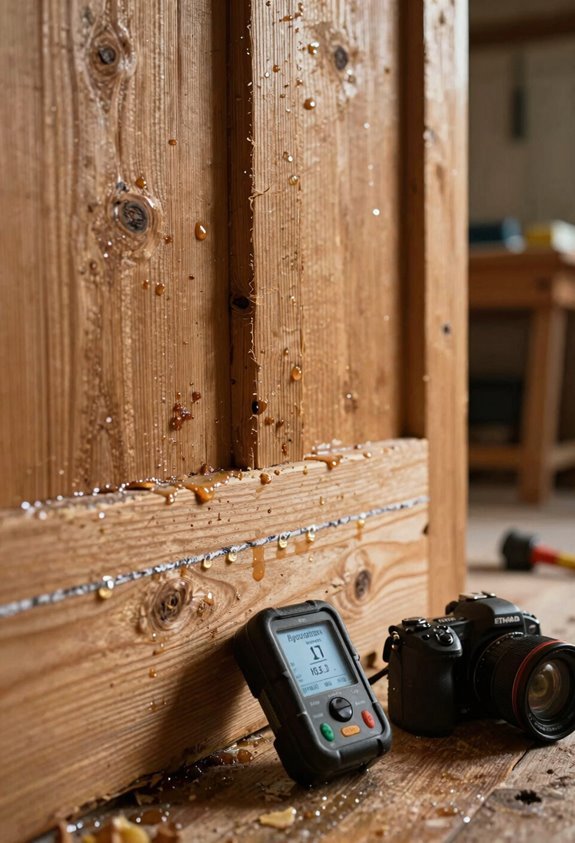
You’ve probably heard that wood needs to be “dried,” but here’s what really matters: getting your wood to the right moisture level before it arrives on your job site, not trying to fix swelling and warping after it’s already there. Wood naturally wants to match the humidity around it. In a heated room, that target is around 6–10% moisture content, well below the 20–35% fiber saturation point where fungi and insects start moving in.
Think of it like preventing a leak instead of mopping up water; catching moisture timing early saves you structural headaches and keeps your wood stable for decades.
Equilibrium Moisture Content Balance
Since wood naturally absorbs and releases moisture from the air around it, we can’t just install lumber and hope it stays stable. We need to understand equilibrium moisture content, or EMC, which is basically the moisture “sweet spot” where wood stops gaining or losing water in a particular environment.
Here’s what makes EMC important:
- Kiln drying gets wood ready before it arrives at your project
- Dimensional stability stays locked in when EMC is controlled
- Fungal risk drops dramatically in heated rooms with proper moisture content
- Long-term durability depends on reaching safe EMC levels before installation
We measure moisture content on-site because temperature and humidity constantly shift your wood’s target EMC. You’re not fighting nature; you’re working with it. Get this balance right, and your wood performs well for years.
Timing Prevention Over Reactive Treatment
When’s the best time to protect wood from moisture damage—before problems start or after they’ve already begun?
I’ll be direct: prevention wins every time. Proper moisture management begins at the mill, not on your job site. Kiln-drying reduces moisture content (MC) to safe levels before wood ever reaches your building. This upfront investment matters far more than applying treatments later.
Here’s why timing is everything:
- Early drying prevents decay. Air drying alone leaves wood vulnerable to fungal growth in heated rooms.
- On-site coating timing is critical. Applying sealers to already-damp wood traps moisture inside, defeating the purpose.
- Sequencing beats repairs. Following proper steps from kiln-drying through final finishing costs less than fixing rot.
Monitor moisture content regularly with quality meters throughout your project. You’re protecting your investment by staying ahead of problems.
Fire Safety: What Wood Can and Can’t Do
How fire-safe is wood, really? I’ll be honest—it’s more nuanced than you might think. Fire retardants slow flames and reduce flammability, but they won’t make wood completely fireproof. Here’s what actually works:
- Fire retardants reduce flame spread but don’t stop determined fires
- Gypsum wallboard and sprinkler systems dramatically enhance protection
- Mass timber (heavily timbered assemblies) chars and resists better than regular lumber
- External flames override retardants when heat and oxygen are present
The truth is, fire safety requires layering strategies. You’re combining retardants, protective coatings, sprinklers, and smart construction details. During building phases, especially unprotected framing, these measures become critical.
Wood buildings can be fire-resistant, just not fireproof. Understanding this distinction helps us build smarter, safer structures we can trust.
Protecting Wood From Pests and Fungi
What threatens wood more than fire in many climates? Fungi and insects. You have termites, powderpost beetles, and carpenter ants all eyeing your wooden structures. Here’s what I’ve learned: fungi need warmth (around 25–30°C), oxygen, and moisture to thrive. That’s why moisture control is your first defense.
The key strategies I’d recommend:
- Drying wood thoroughly before installation
- Applying coatings to reduce moisture absorption
- Using wood preservatives through impregnation methods
Coatings work like a shield, reducing how much moisture wood absorbs and preventing surface cracks. Wood preservatives penetrate deeper, protecting against fungal decay at the fiber level.
Since wood’s fiber saturation point ranges from 20–35%, keeping moisture below these thresholds stops fungi dead. You’ll need regular retreatment; wood isn’t completely immune, but these methods significantly extend its lifespan.
Wood Maintenance Made Simple: Repairs, Finishes, and Tools
Once you’ve protected your wood from pests and fungi, you’ll find that keeping it in great shape doesn’t require specialized skills or expensive equipment. You can refresh finishes with oils, stains, or paints in just a few hours, and handle most repairs yourself using basic handheld tools like sanders, chisels, and brushes.
The key to long-term durability is staying consistent with moisture management and scheduling regular maintenance. Treat your wood right, and it’ll reward you with years of reliable performance.
Easy Treatment And Finishing
Why do some wooden decks last for decades while others deteriorate in just a few years? The answer lies in proper wood treatment and finishes that protect against moisture, the primary enemy of wood longevity.
I’ll guide you through what makes maintenance achievable:
- Oils penetrate deeply, nourishing wood while repelling water
- Stains add color while providing UV protection in hours
- Paints create barriers against moisture damage and weathering
- Sealers lock in protection, requiring reapplication every few years
You can apply these finishes within hours, not days. For effective moisture management, I recommend quality materials and working with professionals who understand wood’s needs. The straightforward application process means you’re not locked into expensive upkeep. Regular maintenance keeps your woodwork looking fresh across generations.
Handheld Repair Solutions
How quickly can you fix a dent in your wooden deck? You’d be surprised—most repairs don’t require expensive equipment or specialists.
I can tackle common wood repairs using basic handheld tools like sanders, chisels, and brushes. Filling gaps, sanding rough spots, and refinishing damaged areas are straightforward tasks you’ll manage without much fuss.
The key to successful repairs? Managing moisture properly. I control moisture content through proper sealing and drying, which prevents swelling and warping that’d undo my work. Kiln-dried wood offers extra protection against fungi and insects, making repairs more durable.
After fixing wood, I apply quality finishes and protective sealants. These coatings minimize moisture exchange and surface cracking, extending your wood’s lifespan significantly. Combined with handheld tools, smart moisture management makes wood maintenance into an achievable, satisfying project.
Homeowner-Friendly Maintenance Approaches
Beyond those quick handheld fixes, you’ll want a solid maintenance plan that keeps your wood in top shape year-round. I’ve found that smart wood maintenance starts with understanding moisture management, the real key to preventing damage before it happens.
Here’s what works:
- Apply finishes regularly using oils, stains, or paints that dry within hours
- Monitor moisture content with quality moisture meters to catch problems early
- Retreat coatings annually to shield wood from water exposure and swelling
- Source materials wisely from reputable suppliers for durability that lasts
You’ll prevent warping and fungal growth by keeping moisture levels in check. Most homeowners find that basic upkeep—coating, checking, retreating—feels manageable.
When complexity arises, skilled professionals help with long-term planning. This approach keeps your wood investment protected and performing well.
Beyond Light-Frame: Why Wood Now Goes 18 Stories High
Although wood buildings were once capped at six stories, modern building codes have completely changed what’s possible with timber construction. The 2019 ICC adopted measures allowing mass timber to reach 18-story height, changing how we build tall structures.
Modern building codes now permit mass timber construction to reach 18 stories, revolutionizing how we build tall structures.
Here’s what makes this possible: engineered products like CLT (cross-laminated timber) provide strong structural frames with built-in fire resistance. These aren’t ordinary wooden beams; they’re advanced materials designed for safety.
We’ve also developed protective strategies. Fire retardants treat the lumber, while sprinkler systems and gypsum board assemblies shield the wood during and after construction. Modern engineering proves wood can compete with concrete and steel.
The benefits include faster construction, prefabrication advantages, and carbon sequestration. You’re looking at buildings that are both safer and more sustainable.
How Wood Captures and Stores Carbon
Wood’s carbon-storage ability starts in the forest. As trees grow, they absorb carbon dioxide and store it as carbon within their wood. When we harvest and use that wood in buildings, we’re not releasing that carbon back immediately, we’re locking it away.
Here’s why that matters to our community:
- Trees pull CO₂ from the air during growth through carbon sequestration
- Wood products keep that carbon trapped during their entire service life
- Long-lived applications like mass timber construction extend storage for decades
- Reforestation ensures new trees replace harvested ones, continuing the cycle
Using wood in construction is like putting carbon in a time capsule. Engineered wood and mass timber maintain this carbon storage while providing durable, fire-resistant buildings. It’s sustainable building that actively fights climate change.
Sourcing Quality Wood: Suppliers, Timing, and Standards
Now that you understand how wood stores carbon and fights climate change, let’s talk about something equally important: making sure the wood you actually build with is quality stuff.
I recommend ordering through established timber suppliers rather than grabbing random lumber. They maintain consistency and quality across your projects. Here’s what matters:
Moisture Control: Use wood moisture meters on-site at every stage. You’re checking that wood isn’t too wet or too dry, typically 12-15% for interior work.
Kiln Drying: Air drying alone won’t cut it for heated rooms. Kiln drying reaches necessary dryness levels while stopping fungal growth.
Species Selection: Choose heartwood varieties for decay resistance. Sapwood needs treatment for durability.
Following procurement standards with qualified professionals minimizes waste and maximizes efficiency. You’re investing in your project’s longevity.