Building wood steps is like constructing a bridge between two worlds: your deck and your yard. I’ll show you how to create safe, sturdy stairs without hiring a contractor. Whether you’re a confident DIYer or tackling this for the first time, the process breaks down into five manageable phases.
But here’s the thing: one measurement mistake early on can throw off your entire project. Let me walk you through what you need to know.
Determine if This Is a DIY Project
Before you grab your tools, here’s the honest truth: not every stair project belongs in the DIY category.
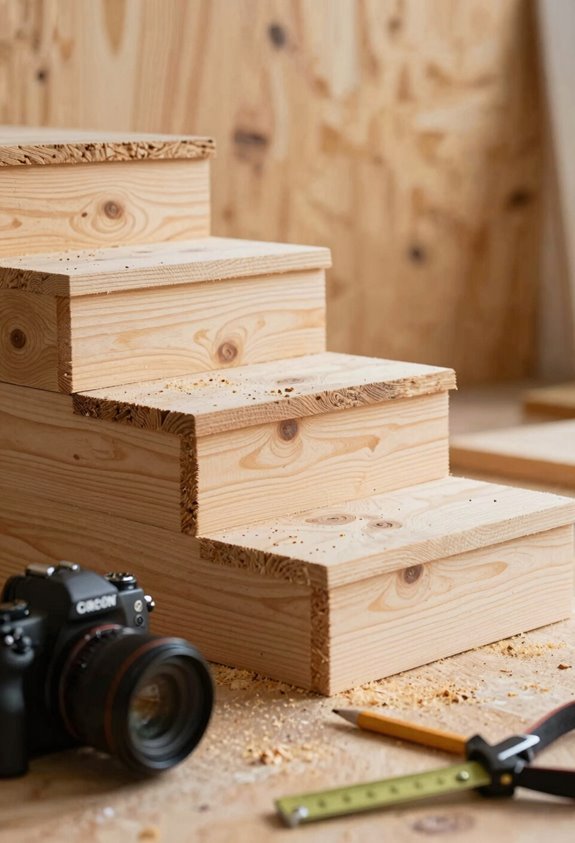
Small porch steps, think 2 to 3 feet high, make perfect weekend projects. You’ll need basic tools and two 10-foot 2x12s for stringers (the angled supports holding everything up). The real challenge? Meeting code requirements. Your risers can’t exceed 8-1/4 inches in height, and treads must be at least 9-1/2 inches deep. These measurements aren’t suggestions; they’re safety standards.
Larger stairs or longer runs? That’s when you should call a professional. Climate matters too. Utah’s freeze-thaw cycles can crack poorly built steps. If you’re uncertain about local codes or your area’s weather effects, consider using pre-cut stringers or consulting an expert.
Starting simple keeps mistakes minimal and your project manageable.
Measure Total Rise and Calculate Riser Height
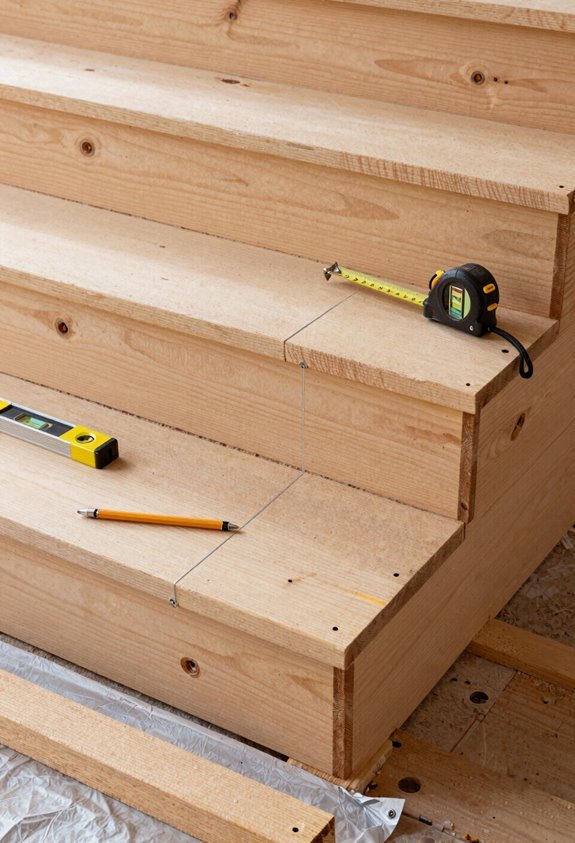
Once you’ve decided your project is manageable, it’s time to measure what you’re actually building. I’ll measure the Total Rise, the distance from your finished deck down to the ground. This includes any decking thickness.
Next, I divide that Total Rise by how many steps I want. Most stairs use Riser Height between 7 to 8 inches per step, which feels natural when climbing. Here’s the critical part: my Uniform Risers must match.
No two steps should differ by more than 3/8 inch, or the staircase feels awkward and unsafe. After calculating, I verify my math. If my Total Rise is 42 inches and I want 6 steps, that’s 7 inches each. Perfect. I double-check before cutting anything.
Prepare the Ground and Set Footings
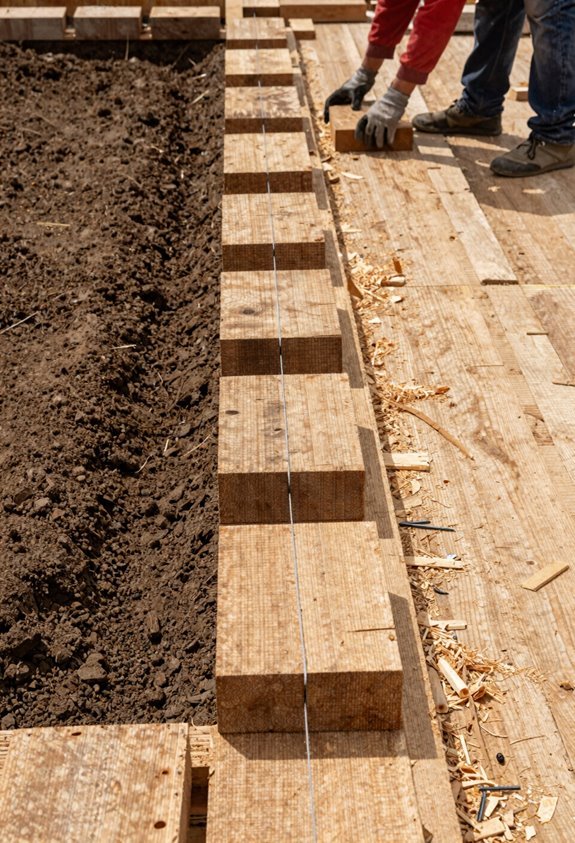
How’s your ground looking? Before you build, you’ll want to flatten and compact your work area using a shovel and hand tamper. This creates a stable surface, like smoothing clay. Next, clear away debris and level everything out. Your steps need a solid foundation to prevent settling.
Here’s what you’ll do:
- Plan your footings: Choose concrete pads or sleeper boards to keep wood off direct dirt contact
- Set up foundations: Pour cement-ready bases a few days ahead, allowing time to cure completely
- Position footings: Place them back from any old posts if you’re upgrading
- Check leveling: Make sure everything sits even before attaching stringers
Proper footings mean your steps will stay put for years.
Cut and Install Your Step Stringers
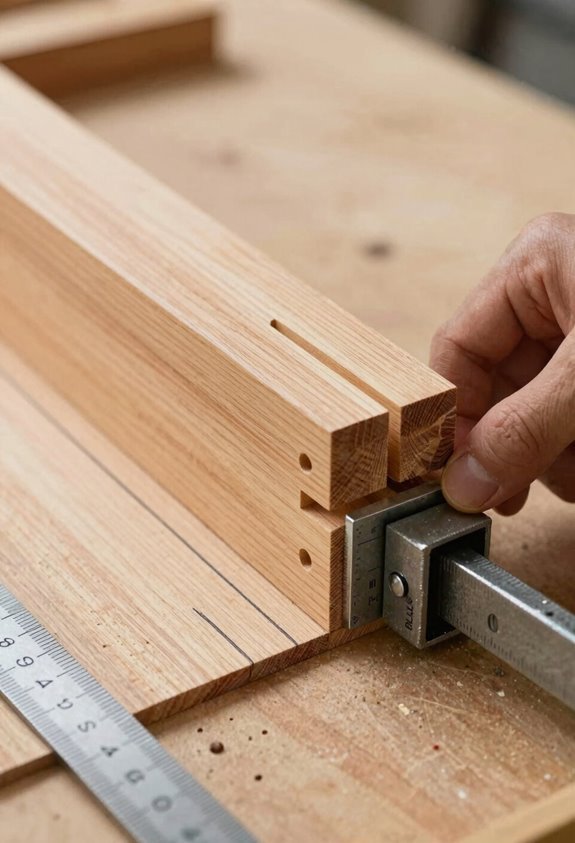
The stringers are basically the backbone of your steps; they’re the diagonal support beams that hold everything up. I’ll cut notches into them for both risers (the vertical parts) and treads (where you step).
Here’s my approach:
- Use a framing square with stair gauges to mark notch locations precisely
- Cut with a circular saw up to the corner, then finish with a handsaw to keep strength intact
- Space three stringers no more than 16 inches apart on a 36-inch-wide run
- Install risers first, then treads, leaving small gaps for water drainage
For ground-contact stringers, I’m choosing treated lumber or redwood for durability. Keep riser height consistent—no higher than 8-1/4 inches—and make sure treads are at least 9-1/2 inches deep. This setup keeps your steps safe and long-lasting.
Attach Risers, Treads, and Handrails
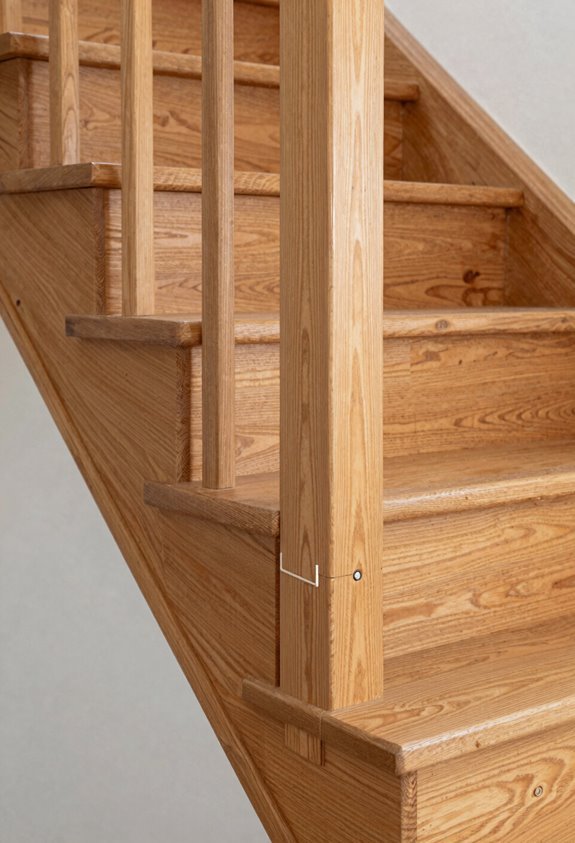
After your stringers are in place, it’s time to build on that foundation by adding the risers, treads, and handrail, the parts that’ll actually make your steps functional and safe.
Start by cutting risers to fit your stringers precisely. You’ll account for tread thickness in each cut, then secure them with wood screws or finish nails after pre-drilling. Next, install treads on top of the risers, checking that each one’s level front-to-back.
Finally, attach your handrail to the wall, leaving a 1.5-inch gap between the handrail and wall surface. Anchor brackets directly into studs for maximum stability.
Before using your steps, verify all rises and runs are consistent, test the handrail’s stability, and confirm every connection’s secure.