We’ve all dreamed of creating beautiful, handcrafted pieces from wood, transforming raw materials into something both functional and artistic. But let’s face it, diving into woodworking can seem like a pricey endeavor, with the cost of tools and materials quickly adding up. However, we’re here to tell you that it’s entirely possible to pursue your woodworking passion without breaking the bank.
By focusing on essential tools, smart material choices, and a sprinkle of creativity, we can explore how to set up a budget-friendly woodworking workshop. Whether you’re a beginner looking to dip your toes into the world of woodworking or a seasoned craftsman aiming to cut down on expenses, we’ve got some tips and tricks up our sleeves. Let’s embark on this journey together, proving that woodworking on a budget isn’t just a possibility—it’s a practical and enjoyable reality.
Embracing Woodworking on a Budget
Continuing from understanding the fundamentals of setting up a cost-effective woodworking haven, let’s delve into how we can truly embrace woodworking on a budget. It’s about more than just minimizing expenses; it’s about creating value and maximizing our resources in the most innovative ways possible.
- Invest in Versatile Tools: Prioritizing purchases towards versatile tools that serve multiple functions can significantly reduce our initial setup cost. For instance, a quality circular saw can do the job of several specialized saws.
- Source Materials Wisely: Look for lumber deals at local mills or consider reclaimed wood, which not only saves money but also adds character to projects. Pallet wood is a great option for beginners, offering a low-cost way to practice skills.
- Leverage Sales and Discounts: Keeping an eye out for sales at our local hardware stores or online platforms can help in acquiring high-quality tools at a fraction of their original price. Joining woodworking forums and groups can also lead to tips on upcoming deals.
- DIY Jigs and Fixtures: Instead of investing in expensive, brand-name jigs, we can build our own using scrap materials. There are countless plans available online that cater to varying skill levels, providing a cost-effective avenue to increase precision and safety.
- Learn from Free Resources: The internet is a treasure trove of free woodworking tutorials, plans, and advice. Platforms like YouTube have numerous channels dedicated to woodworking techniques and project guides, eliminating the need for costly classes or books.
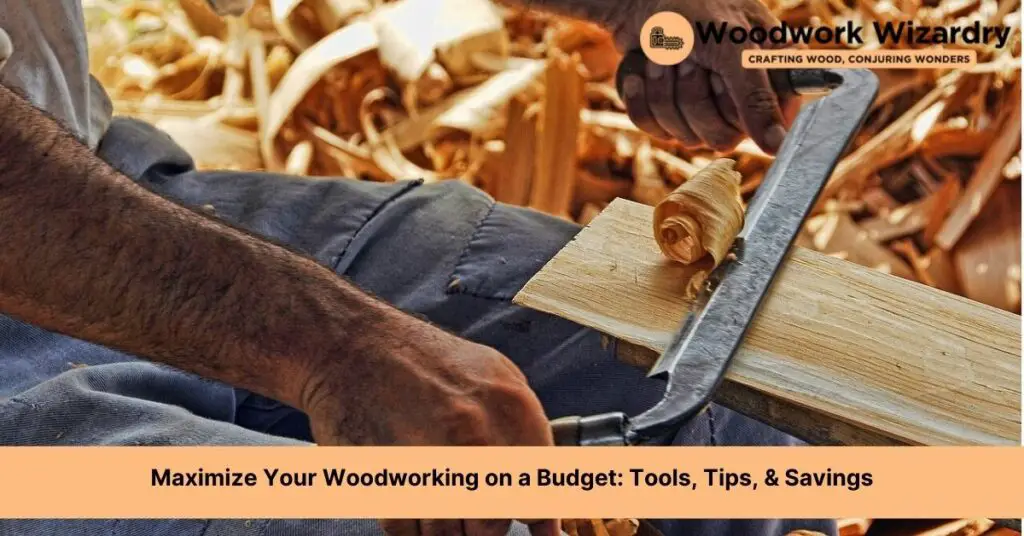
- Embrace Hand Tools: While power tools save time, hand tools can achieve the same results with more control and less investment initially. Learning to use hand tools effectively can also enhance our skill set and appreciation for the craft.
By adopting these approaches, we can enjoy woodworking as a fulfilling hobby or a passionate endeavor without letting budget constraints limit our creativity. Each project completed under budget not only adds a piece to our collection but also builds our confidence and skills, proving that woodworking on a budget is not just feasible but also rewarding.
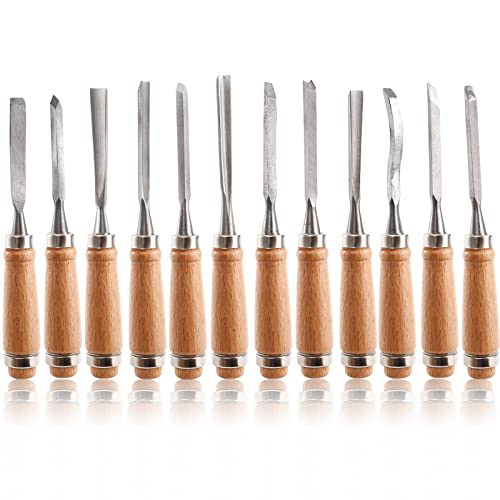
Specifications - 12 pcs wood carving chisel with an easy carrying leather bag. Enough variety of the tips in different 12 sizes-deep gouge, medium gouge, shallow gouge, narrow straight chisel, wide straight chisel, rounded chisel, 4 angled knives / chisels, parting tool, pinpoint tool. Our full size durable woodworking sets would be helpful tools in your happy wood carving time.

***18+ Only - Age Verification Required 25-PREMIUM WOOD CARVING TOOLS FOR EVERY PROJECT:This comprehensive wood carving kit includes 3 chisels, 8 whittling knives, 5 detail knives, 1 scriber, 1 hammer, 1 marking knife, 1 large sharpening stone, polishing paste, a leather strop, and safety gloves. Perfect for wood carving, spoon carving, stone carving, and detailed craftwork, it meets all your artistic needs whether you're a beginner or a professional.

Value Package: Comes with 12 different pieces wood carving chisel set, with handles approx 4.7" long and blades about 4" long, including flat blade, oblique blade, round edge, large triangular edge, etc.
Essential Tools for Beginner Woodworkers
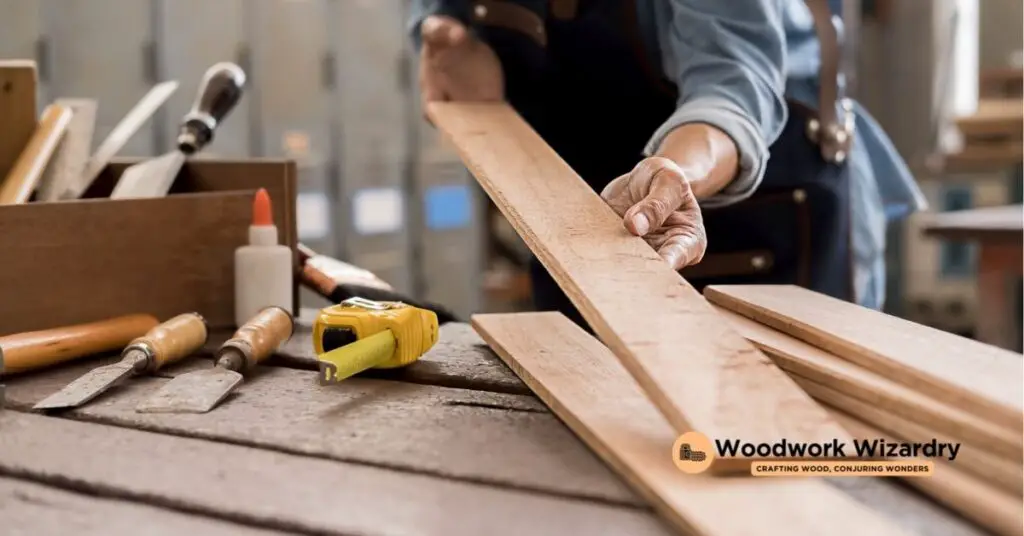
Taking the previous advice into account, we now focus on the essential tools that beginner woodworkers need to start their journey without breaking the bank. Opting for quality over quantity, we recommend a curated list of tools that offer versatility and efficiency.

SPECIFICATION: Diameter: 7-1/4 inch circular saw blade(185 mm); Arbor size: 5/8 inch(15.88 mm) ; Max Rpm:8000; Carbide Teeth: 24 T 40 T 60 T

Featuring both a 32-tooth blade for general woodcutting and a 60-tooth blade for fine-finish woodworking

APPLICATION – GRAFF 4 1/2 circular saw blade is suitable for cutting wood, plywood, drywall, MDF, plastic and all other non-metallic materials.
Hand Tools
- Chisels: Vital for detail work and joinery, such as dovetails. A set of four with different sizes, ranging from 1/4 inch to 1 inch, serves most needs.
- Hammer: A 16 oz claw hammer doubles for driving nails and fitting parts.
- Screwdrivers: A mix of flathead and Phillips in various sizes. Consider purchasing a multi-bit screwdriver to save space and money.
- Measuring Tape and Ruler: Accuracy is key in woodworking. A 25-foot measuring tape and a 12-inch steel ruler are indispensable.
- Hand Saw: Perfect for making quick cuts without the setup time of power tools. A general-purpose hand saw is a cost-effective choice.
Power Tools
- Cordless Drill: The most versatile power tool, useful for drilling holes and driving screws. A 12V or 18V model suffices for most tasks.
- Circular Saw: With a straight edge or guide, this tool can make precise cuts, almost as good as a table saw, for a fraction of the price.
- Random Orbital Sander: Saves hours of sanding by hand, providing a smoother finish, with various grit sandpapers.
- Clamps: Essential for holding workpieces steady. A mix of bar or pipe clamps and smaller clamps like C-clamps or spring clamps are recommended.
- Safety Gear: Safety cannot be overstated. Basic safety gear includes goggles, dust masks, and hearing protection.
By starting with these basic tools, beginner woodworkers can tackle a wide range of projects. It’s important to remember, as skills grow, so can the tool collection, but these basics offer a solid foundation for exploring woodworking on a budget.
Finding Affordable Materials
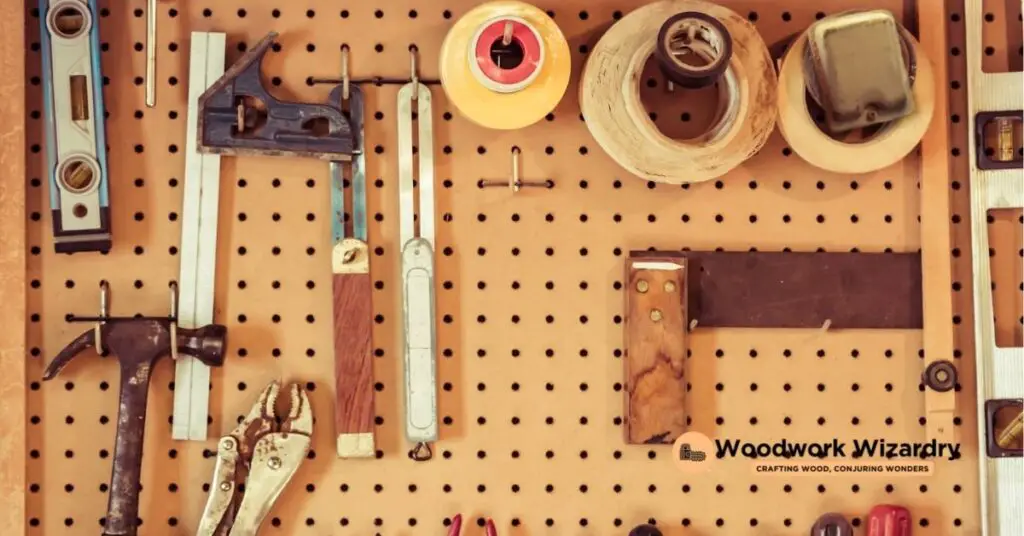
Transitioning from the essential tools required for beginning woodworkers, it’s crucial to discuss how to source affordable materials, a key aspect of woodworking on a budget. We understand that quality and cost-effectiveness are both important when seeking out materials for your projects.


MICHIGAN ARTISTS & PRINTERS | this design was drawn and screen printed (silk screened) with pride by our skilled illustrators and printers in Ann Arbor. If you're ever in the area, stop by for a free tour and see how we make your apparel! Tagless tag is printed on fabric inside collar, you can't feel it.

– Detects hidden nails, screws, staples, wire, and metal fragments before they destroy your $30-$100+ planer, jointer, or saw blades. An essential safety tool prevents flying metal injuries in your workshop.
Local Resources
Firstly, consider tapping into local resources. Often, construction sites, local mills, or community workshops might have surplus or scrap wood they’re willing to give away or sell at a lower cost. By doing so, you not only save money but also recycle materials, contributing to a more sustainable practice.
Online Marketplaces
Online marketplaces like Craigslist, Facebook Marketplace, or Freecycle can be gold mines for finding bargain deals on wood. Members of the community frequently list leftover materials from completed projects or even pieces of furniture that can be repurposed into new creations. Regularly checking these platforms can lead to great finds.
Discounted Retail Options
Don’t overlook discounted retail options. Lumber yards and home improvement stores often have sections where they sell offcuts or slightly damaged materials at a reduced price. These pieces, while not perfect, are still very usable for many projects, especially for those just starting out.
Reclamation Centers
Lastly, exploring architectural salvage or reclamation centers could yield unique and affordable wood. These places specialize in salvaging materials from deconstructed buildings, offering a variety of wood at lower prices. Not only does this approach save money, but it also adds character and history to your woodworking projects.
In our journey to keep woodworking costs manageable, finding affordable materials plays a pivotal role. By exploring local resources, online marketplaces, discounted retail options, and reclamation centers, we can source materials that don’t break the bank but still allow the creativity and quality of our woodworking projects to flourish.
Learning and Improving Your Skills

After securing the essential tools and finding affordable materials, we then focus on refining our woodworking skills without breaking the bank. The journey of skill enhancement in woodworking is as crucial as the initial setup, and fortunately, it doesn’t have to be expensive. Let’s explore some effective methods to enhance our woodworking capabilities on a budget.

✅【Complete Woodworking Clamps Set contains totally 40pcs parts】You will get 8pcs positioning squares (4pcs 5.5" + 4pcs 3.14"), plus 32pcs matching accessories, a total of 40pcs corner clamp parts for woodworking! This all-in-one set meets every 90-degree right angle need—no extra parts to buy. Perfect for professional carpenters and DIY woodworking enthusiasts
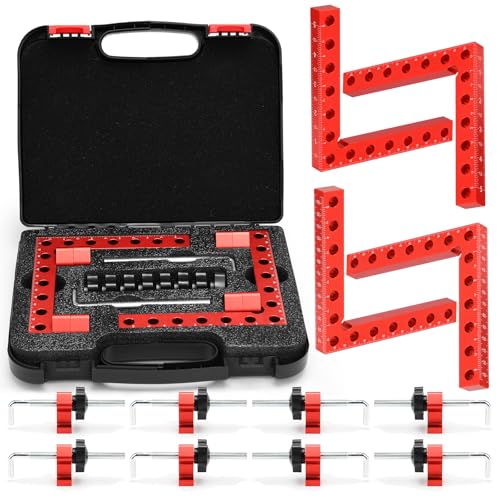
Accurate 90 Degree Clamp: Our 90-degree positioning square right angle clamp set features 4 * Positioning Squares, 8 * adjustable fixing blocks, 8 * M8-1.25 nuts, and 8 * L-shaped bolts. The 135mm and 5 inches scales on both sides are designed for precise measurements. CNC-machined with high precision, these woodworking jigs ensure perfect 90-degree clamping angles, simplifying your woodworking projects

【Ultra-Precise CNC 90° Positioning Clamp】- CNC-machined aluminum alloy ensures accurate 90 degree clamp alignment (±0.1°), corrosion-resistant bule anodized finish.Reinforced with 304 stainless steel fasteners for superior woodworking clamps resilience in damp environments.Professional wood tools quality.
Exploit Free Online Resources
The internet abounds with free learning materials tailored to woodworkers of all levels. Platforms such as YouTube offer thousands of tutorials, from basic techniques to complex projects. Websites and blogs dedicated to woodworking also provide valuable tips and detailed project plans at no cost. By dedicating time to research and learn from these resources, we can significantly improve our skills without spending a dime.
Join Community Workshops
Many communities have local workshops or makerspaces that offer free or low-cost classes on woodworking and other crafts. Participating in these workshops not only improves our skills through hands-on experiences but also allows us to connect with like-minded individuals. Sharing knowledge and experiences with fellow woodworkers can lead to new insights and techniques that enhance our craftsmanship.
Practice with Scrap Wood
There’s no substitute for hands-on practice, especially when it comes to woodworking. Using scrap wood for practice projects allows us to try out new techniques or tools without the fear of wasting expensive materials. It’s a great way to experiment and make mistakes in a low-stakes environment, encouraging learning and improvement through trial and error.
Borrow or Swap Tools with Fellow Woodworkers
Investing in advanced woodworking tools can be costly, but borrowing or swapping tools with fellow woodworkers can be a budget-friendly way to access these resources temporarily. This not only reduces costs but also provides an opportunity to test out tools before committing to a purchase, ensuring we only invest in equipment that meets our needs and preferences.
By utilizing these strategies, we can continue to learn and refine our woodworking skills while keeping our expenses minimal. Engaging in free or low-cost educational resources, community interactions, practice, and strategic tool usage not only supports our budget but also enhances the quality and creativity of our woodworking projects.
Budget-Friendly Projects to Start With
After outlining how to refine woodworking skills economically, we delve into identifying projects perfect for those on a budget. Beginning with projects that require minimal materials and tools ensures costs remain low while still providing ample opportunity to practice and enhance skills.
- Birdhouses: A classic woodworking project, birdhouses require minimal lumber and serve as an excellent starting point for beginners. They provide a practical application of basic skills such as measuring, cutting, and nailing, all while being customizable to suit individual flair.
- Wooden Coasters: Perfect for utilizing scrap wood, creating coasters allows for experimentation with shapes, finishes, and designs. This small-scale project helps practice precision and attention to detail without the pressure of larger projects.
- Picture Frames: Crafting picture frames can be an inexpensive way to start woodworking, requiring only basic tools and materials. This project offers experience with cutting angles and fitting pieces together precisely, essential skills in any woodworker’s toolkit.
- Shelves: Simple shelving units are not only practical but also offer the chance to work with a variety of tools and techniques on a slightly larger scale. They can be tailored to any size, making them suitable for available materials and tool access.
- Plant Boxes: For those interested in outdoor projects, plant boxes are a great choice. They can be as straightforward or complex as one likes, providing a wonderful opportunity to explore different types of joinery and finishes.
Leveraging the strategies mentioned earlier for acquiring affordable materials and tools, these projects can be undertaken without straining one’s budget. They not only facilitate skill development but also lead to practical items that can enhance any home or garden, demonstrating the value and satisfaction of woodworking on a budget. By starting with these budget-friendly projects, woodworkers can build a foundation of skills and confidence to tackle more complex tasks in the future.


Some of the species we carry are: Walnut, Red Oak, White Oak, Poplar, Cherry, Birch, Soft Maple, Hard Maple, Hickory, Cherry, and Red Grandis. You will get at least 3 different species

Maximizing Your Woodworking Budget

After identifying the essential tools, sourcing affordable materials, and selecting beginner-friendly projects, we now turn our attention to maximizing our woodworking budget. This step is crucial for sustaining our passion while ensuring our bank accounts remain healthy. Here are key strategies to stretch every dollar further in our woodworking journey.

Versatile Wood Chisel Set: This chisel set woodworking kit includes 4 pieces wood chisels in different sizes, including 6mm, 12mm, 18mm, 24mm. Can meet your different woodworking needs. The great choice for carpenter tools, craft supplies and tools, bushcraft tools, wood working tools and accessories
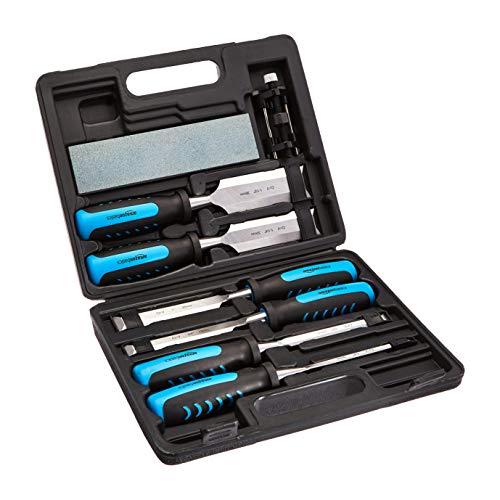
8-piece wood carving chisel set includes 6x chisels 1/4 inch (6mm), 1/2 inch (13mm), 3/4 inch (19mm), 1 inch (25mm), 1-1/4 inch (32mm) and 1-1/2 inch (38mm), 1x honing guide and 1x sharpening stone (120/240 grit)

√ Heat Treated - Made from heat-treated, chrome vanadium steel alloy with a ground finish and narrow side bevels.
Shop Smart for Tools and Supplies
Shopping smart involves looking for discounts, sales, and second-hand options when buying tools and supplies. Online marketplaces and local garage sales can be goldmines for high-quality tools at a fraction of the cost. Additionally, purchasing multi-purpose tools that serve various functions can reduce the need to buy more equipment.
Buy Wood in Bulk
If we have storage space, buying wood in bulk can save money in the long run. Lumber yards often offer discounts for larger purchases, and we can take advantage of these savings. Plus, having a good supply on hand means we’re always ready to start a new project.
Join a Woodworking Club or Co-op
Joining a local woodworking club or co-op can provide access to shared tools and equipment, significantly reducing our initial investment. These communities also offer the chance to connect with experienced woodworkers who can offer tips and advice on completing projects more efficiently, saving both time and money.
Sell Completed Projects
Selling completed projects is a great way to fund our hobby. Platforms like Etsy, local craft fairs, or community bulletin boards offer opportunities to sell our work. This not only helps cover the cost of materials for future projects but also allows us to gauge what projects are popular and potentially profitable.
By implementing these strategies, we can continue to enjoy woodworking without overspending. Whether it’s making the most of our tool investments, buying materials wisely, joining supportive communities, or turning our passion into a small business, we’re well-equipped to navigate woodworking on a budget effectively.
Conclusion
We’ve shared our favorite strategies for keeping your woodworking passion alive without breaking the bank. Remember it’s all about being smart with your investments—choosing the right tools, finding affordable materials, and never underestimating the value of community and shared knowledge. As you grow in your craft, the opportunity to sell your creations can also turn this fulfilling hobby into a self-sustaining venture. So here’s to making the most of every dollar on your woodworking journey. Let’s create more with less and enjoy every moment of crafting something beautiful by hand.
Related Posts:
- Top Woods for Dremel Carving: Expert Picks & Tips
- Can Chainsaws Cut Through Bone? Debunking Myths and Facts
- Can You Dig a Trench with a Chainsaw? Safety & Efficiency Explored
- Staining Over Linseed Oil Finish: A Complete Guide
- How Long Does Wood Glue Take to Dry? Tips for Quick Drying
- Ultimate Guide: How to Stain Douglas Fir for Lasting Beauty
- Prevent Sap Leakage: Effective Wood Maintenance Tips
- Metabo C10RJS Review: Top Choice for Safety & Precision
- Choosing Between a Table Saw vs Miter Saw: Key Features Compared
- Top Picks for Best Plywood for Laser Cutting: Safety & Buying Guide
- Why Are Milwaukee Tools So Expensive? Unpacking the Premium Price
- Maximize Your Woodworking on a Budget: Tools, Tips, & Savings


[5-in-1 Complete Cutting Kit for Every Material]: Master any project with this all-in-one set. This 5-pack includes specialized blades for concrete, tile, metal, and wood: a Segmented Diamond Blade for stone and masonry, a Super Thin Diamond Blade for chip-free tile work, two 24T Carbide-Tipped Blades for fast cuts in wood and soft metals, and a 40T Fine-Finish Blade for ultra-smooth woodworking.

SPECIFICATION: Diameter: 6-1/2 inch circular saw blade(165 mm); Arbor size:5/8 inch(15.8 mm) ; Max Rpm: 8000; Carbide Teeth: 24 T & 60T