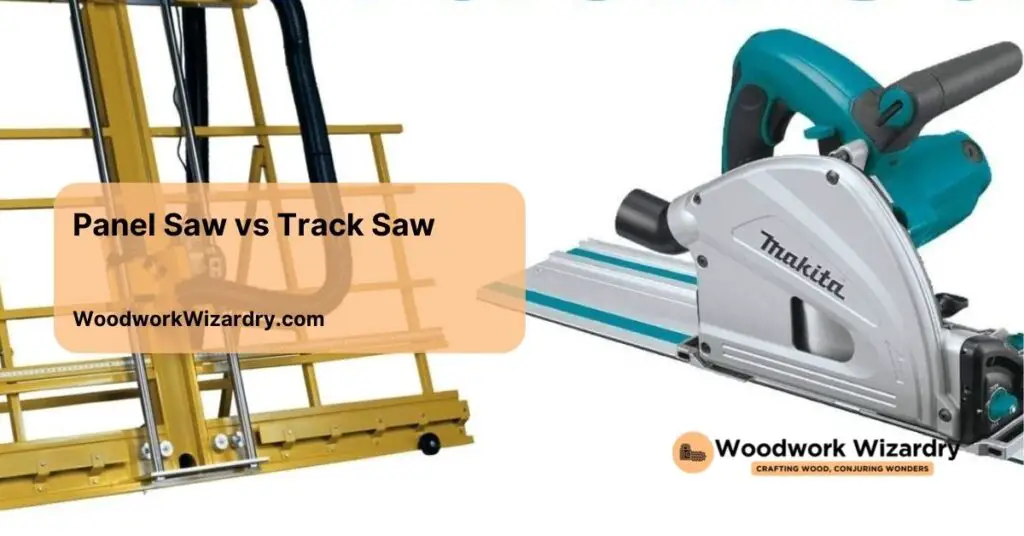
Choosing the right tool can make or break your woodworking projects, and when it comes to precision cuts, the debate between panel saws and track saws is hard to ignore. Both are powerful, versatile tools, but they serve different purposes and excel in unique ways. If you’re stuck deciding which one suits your needs, you’re not alone.
A panel saw offers unmatched efficiency for handling large sheets of material, while a track saw delivers portability and pinpoint accuracy. The question is, which one aligns with your workflow? By understanding their strengths and limitations, you can make a choice that saves you time, effort, and money. Ready to find out which tool deserves a spot in your workshop? Let’s immerse.
What Is A Panel Saw?
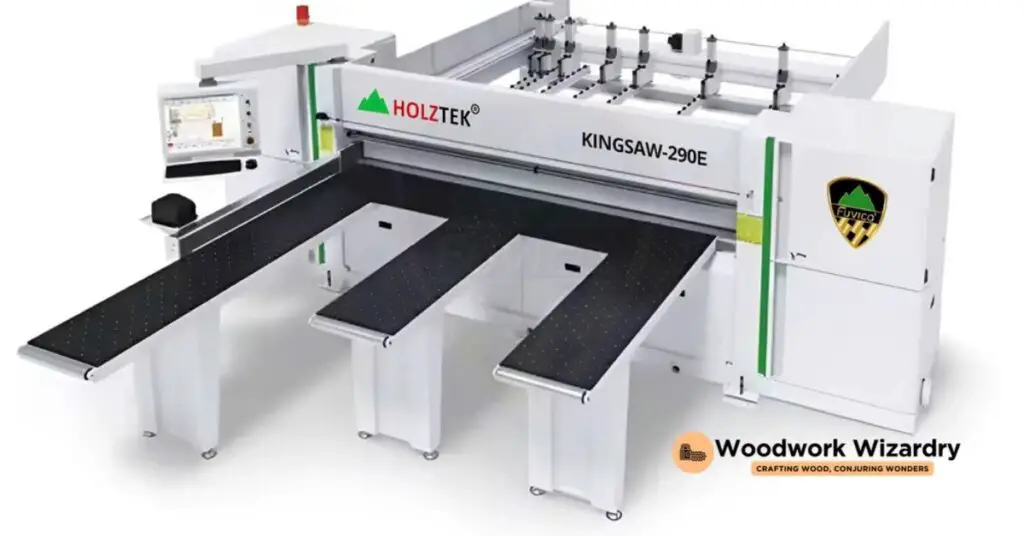
A panel saw is a stationary woodworking tool used to cut large sheets of material like plywood, MDF, and particleboard with precision. Designed for efficiency, it simplifies handling bulky panels that are challenging to work with using handheld tools.

APPLICATION – GRAFF 4 1/2 circular saw blade is suitable for cutting wood, plywood, drywall, MDF, plastic and all other non-metallic materials.

VERSATILE CIRCULAR SAW BLADE: The Benchmark Abrasives 8 inch TCT saw blade is perfect for cutting or trimming both softwoods and hardwoods easily. Whether you’re cutting through plywood, framing wood, or decking, this compact circular saw blade delivers unparalleled results. It is ideal for both seasoned professionals and DIY enthusiasts.

Specification & Dimensions: Total length: 11-3/4 inch (299 mm); Handle length: 6-3/4 inch (172 mm); Saw blade length: 5 inch (127 mm); Saw blade hardness: HRC 62-68
Features Of Panel Saws
Vertical or horizontal orientation defines the primary structure of panel saws. Vertical models take up less floor space, while horizontal models allow easier handling of heavy materials.
Many panel saws include a robust frame and a cutting track to ensure straight, consistent cuts. These tracks hold the sheets in place and minimize movement during operation.
Built-in measuring systems improve accuracy by providing exact dimensions without the need for separate measuring tools.
Motorized cutting components increase speed when compared to manual saws, which reduces cutting time on repetitive tasks.
Dust collection systems often come integrated to maintain cleanliness and improve air quality in your workspace.
Benefits Of Using Panel Saws
Cutting large panels becomes easier since you can position the material securely against the machine’s support frame. There’s no need to lift or reposition the panel multiple times.
Accurate cuts are achievable thanks to the precise tracking system and in-built measurement alignment features. Common errors like drifting or uneven edges are less likely.
Time efficiency significantly improves on projects requiring repetitive cuts due to the automated functionality many panel saws offer.
Space optimization is a major advantage, particularly for vertical panel saws, as they allow you to perform large cuts without occupying a large workshop area.
Durability makes a panel saw a long-term investment, as these machines are built to withstand continuous use in professional and industrial environments.
What Is A Track Saw?
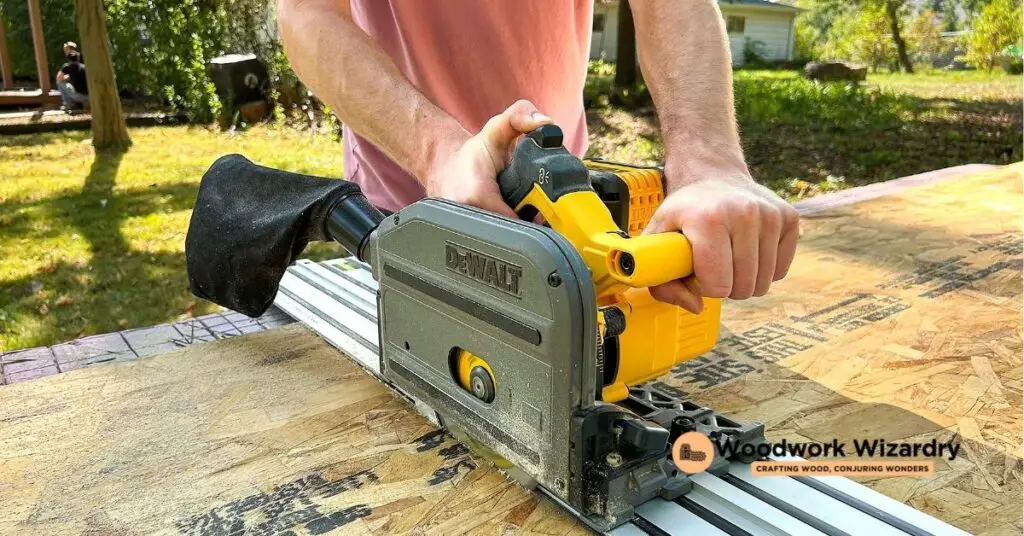
A track saw is a portable power tool designed for precise cutting of wood and other sheet materials. Unlike stationary tools, it pairs with a guide rail, allowing clean, straight, and repeatable cuts on various surfaces.

【 Product Features】Ample Quantity for All Your Needs:Receive 16 pieces of medium density fiberboards (MDF), each measuring 11 x 14 inch with a thickness of 1/4”. This...
Features Of Track Saws
Track saws have several distinguishing features that enhance their functionality. They come with a guide rail to maintain accuracy during cuts. Many models include depth adjustment settings for versatile plunge cutting. Circular blades are enclosed for better safety and reduced dust dispersion. Integrated dust extraction ports help maintain cleanliness. Compact and lightweight designs make them easy to transport, ideal for on-site work.
Benefits Of Using Track Saws
These tools offer multiple advantages for woodworking. Precision improves due to the cutting accuracy provided by the guide rail, minimizing errors. Portability allows you to carry them easily from one location to another. Track saws save workspace because of their compact design compared to larger saws. Clean cuts become more achievable, even on delicate or veneered materials, when using the proper blade. Adaptability enables cutting panels, straight lines, and bevels with minimal effort.
Panel Saw Vs Track Saw: Key Differences
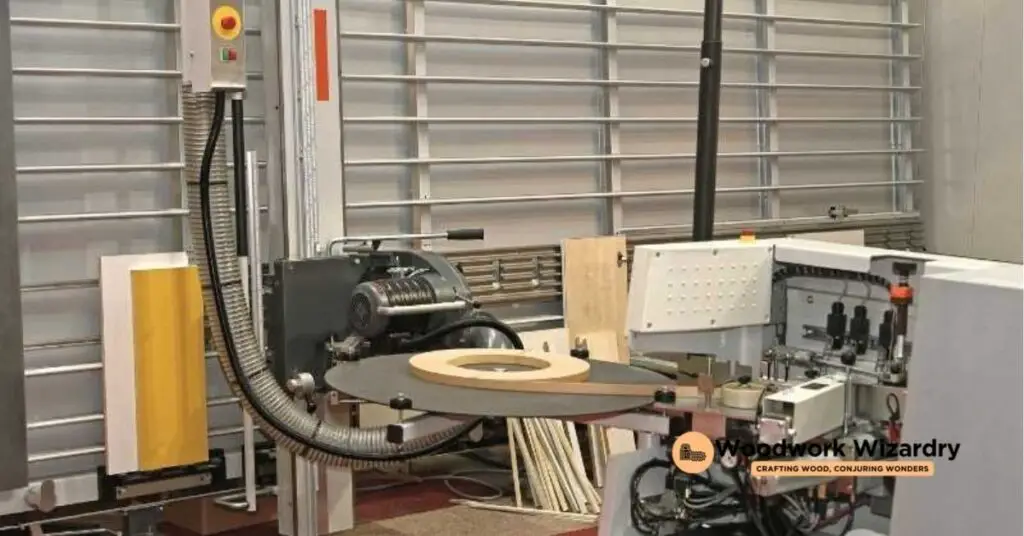
Panel saws and track saws differ significantly in design, precision, cutting capacity, and durability, giving each tool a unique set of advantages. Understanding these differences helps you choose the right tool for your woodworking needs.

Premium Plunge-Cutting Circular Saw: Gives you perfectly straight cuts without splinters or chips

Accurate Cutting: Upgrade your rip guide precision with the Wixey digital rip saw fence system that offers ±0.002" accuracy per ft and a digital readout for reliable, repeatable cuts across all woodworking projects

Saw Blade Height Gauge: crafted from quality aluminum, this blue digital height gauge for table saws and router ensures precise height adjustments; Setup Table Saws blade height From 1/8" to 2" in increments of 1/8"; Perfect for woodworking enthusiasts seeking accuracy and consistency in their cuts, it effortlessly streamlines the woodworking process
Design And Portability
Panel saws are large, stationary machines requiring a dedicated workspace. Their vertical or horizontal frames handle full-size sheet materials, making them ideal for professional woodshops. Track saws, in contrast, are compact and portable. You can easily transport them to job sites, and their guide rails fit in confined spaces, offering flexibility for on-the-go projects.
Accuracy And Precision
Track saws deliver impeccable precision, especially for straight cuts on thin or delicate materials. The guide rails maintain alignment, and adjustable depth settings add versatility. Panel saws, while accurate for repetitive cuts, prioritize efficiency over detailed precision, better suiting large panel processing. Rely on a track saw if high-cutting accuracy is critical to your tasks.
Cutting Capacity And Versatility
Panel saws excel when cutting large sheets of material like plywood and MDF. Their robust build accommodates industrial-level workloads. Track saws offer greater versatility, managing plunge cuts, beveled edges, and intricate designs. Use a track saw for diverse projects requiring adaptability in cut patterns and materials.
Maintenance And Durability
A panel saw’s heavy-duty construction ensures long-term durability with regular maintenance. Tasks like lubricating rails and calibrating cutting components maintain their performance. Track saws have lower upkeep requirements, but their lightweight build may wear faster in demanding environments. If durability for heavy use matters most, panel saws are your best choice.
When To Choose A Panel Saw?
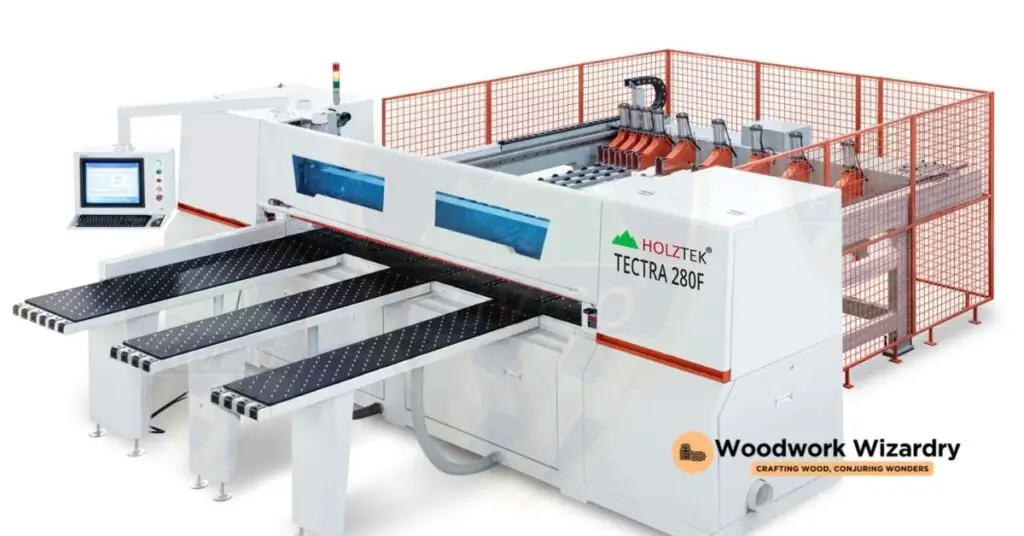
A panel saw works best for handling large sheets of materials like plywood, MDF, or particleboard. If you primarily cut panel-sized materials, it’s a more efficient choice. Its stationary design simplifies repetitive cuts and reduces material handling challenges.
Focusing on high-volume projects, a panel saw ensures precision and time-saving advantages. Professional workshops benefit the most when working with bulk material cutting tasks. Built-in measurement systems and sturdy frames support consistent accuracy, even during extended use.
For limited workspace, a panel saw optimizes real estate. Instead of maneuvering large sheets through portable tools, the stationary setup allows easier workflows. Businesses needing long-term durability in demanding environments often rely on these machines, especially when minimizing downtime is critical.

Premium Home Improvement Tools: Universal compatibility fits most circular saws in the market with blades up to 7-1/4”

Premium Home Improvement Cutting Tools: Track saw guide turns circular saws into precision, track-guided tools
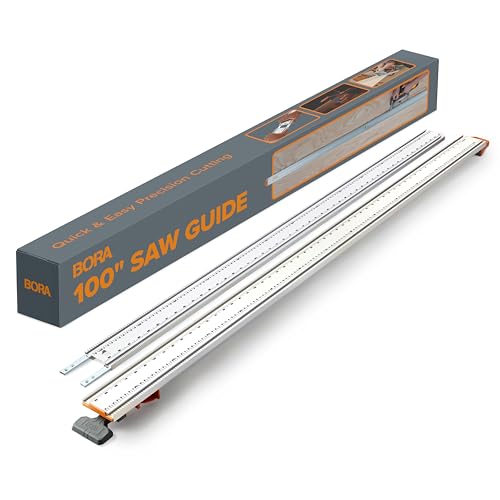
100 Inch Circular Saw Guide Rail: Professional track saw guide rail system combines 50 inch clamp edge and 50 inch extension; delivers precise straight edge cuts on plywood and large sheet materials with any circular saw
When To Choose A Track Saw?
Opt for a track saw when precision and portability are your priorities. These tools excel at making straight, clean cuts on thin or delicate materials like plywood, MDF, and laminate. If your project involves repetitive plunge cuts or beveled edges, the track saw’s adjustable depth settings and guide rails ensure consistency.
Consider using a track saw for on-site work, as its lightweight, compact design allows easy transport and setup. Space limitations in your workshop or job site also make the track saw an ideal choice, as it requires minimal storage compared to bulky machinery. Its enclosed blade and dust extraction features make it safer and cleaner for indoor use.
Track saws are particularly useful when working with diverse materials that require precise adjustments. For tasks where large panel manipulation isn’t feasible, such as trimming doors or creating furniture components, the track saw provides flexibility. You’ll achieve accurate results without needing the expansive space or infrastructure typically associated with stationary tools.

Saw Guide Compatibility: This saw guide turns your circular saw into a precision edge-guided tool; works best with a regular (side-blade) circular saw, corded or cordless, that has a blade guard or base that allows the sled to clamp securely

TURNS YOUR CIRCULAR SAW INTO A PRECISION CUTTING TOOL: Transforms ordinary circular saws into an edge-guided cutting tool, delivering accurate, straight, and repeatable cuts from 1 inch up to 22 inches wide

Premium Home Improvement Cutting Tools: Track saw guide turns circular saws into precision, track-guided tools
Conclusion
Choosing between a panel saw and a track saw eventually depends on your exact needs and the nature of your projects. If you’re working with large sheets in a professional workshop, a panel saw offers unmatched efficiency and durability. On the other hand, a track saw provides the precision and portability needed for versatile, on-site tasks.
By understanding the unique strengths of each tool, you can invest in the one that best complements your workflow. Whether you’re prioritizing accuracy, mobility, or high-volume cutting, selecting the right saw will enhance your productivity and deliver better results.

SPECIFICATION: Diameter: 7-1/4 inch circular saw blade(185 mm); Arbor size: 5/8 inch(15.88 mm) ; Max Rpm:8000; Carbide Teeth: 24 T 40 T 60 T

5-1/2 Inch 130T Circular Saw Blade 5/8 Inch (16mm) Arbor with 1/2" and 3/8" Bushing - 3 Pack

LIGHTWEIGHT - The lightweight 2-3/16" tube rail construction of the PRO-Grip Clamps ensures rigidity, making them ideal as a circular saw guide clamp or as a straight edge guide for precise cuts